

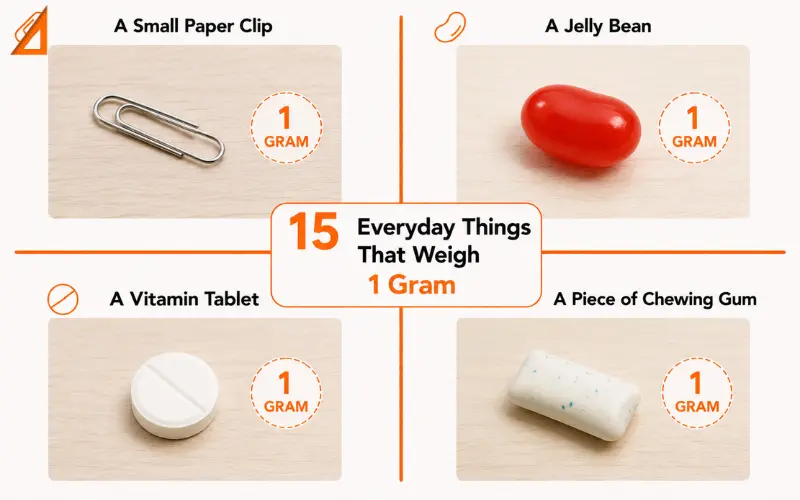
What Weighs 1 Gram? A gram is one of those measurements that sounds familiar, but it’s surprisingly hard to picture. Ask someone what a kilogram feels like and they’ll probably think of a bag of sugar. Ask about a gram, and most people pause for a second.
That’s because one gram is tiny. You can hold it in your hand and barely notice it’s there. Yet things weighing about a gram are all around us. From the cash in your wallet to the raisins in your cereal, you’ve probably touched dozens of one-gram objects today without realizing it.
If you’ve been wondering what weighs 1 gram, what weighs a gram, what weighs one gram, or things that weigh 1 gram, everyday objects make it much easier to understand than numbers ever could.
Quick Answer
If you’re wondering what weighs 1 gram, the answer is easier to understand through familiar objects rather than numbers. A single dollar bill weighs almost exactly one gram, and so do many everyday items like a raisin, a small paper clip, a coffee bean, a postage stamp, and a jelly bean.
Since one gram equals 1,000 milligrams or 0.035 ounces, it feels incredibly light in your hand. In fact, most people handle one-gram objects every day without ever noticing their weight. That’s why using real-life examples makes it much easier to picture what one gram actually feels like.
1 Gram Conversion Table
| Measurement Unit | Equivalent Value |
|---|---|
| 1 Gram | 1,000 Milligrams (mg) |
| 1 Gram | 0.001 Kilograms (kg) |
| 1 Gram | 0.035 Ounces (oz) |
| 1 Gram | 0.0022 Pounds (lb) |
| 1 Gram | 15.43 Grains |
| 1 Gram | 0.001 Liters of Water |
| 1 Gram | 1 Cubic Centimeter (cc) of Water |
| 1 Gram | 0.000001 Metric Tons |
Realated Post: How Big Is 2 CM
What Does 1 Gram Feel Like?
Honestly, it feels like almost nothing.
Try placing a paper clip or a raisin on your palm. You can see it clearly, but you don’t really feel much weight. That’s because one gram is incredibly light.
Most people notice size before weight. A tiny object may look obvious, but your hand hardly registers that single gram.
Why Knowing One Gram Is Useful
You don’t have to work in a laboratory to come across gram measurements. They show up in everyday life more often than most people realize. If you’ve ever measured coffee before brewing it, taken a vitamin in the morning, or added a pinch of spice while cooking, you’ve already dealt with weights measured in grams.
Jewelry is another good example. Rings, earrings, and chains are usually sold by weight, and even a difference of a few grams can affect the price. The same goes for mailing letters, where a tiny increase in weight can change postage costs.
Once you start recognizing what one gram feels like, small measurements stop feeling like random numbers. A gram becomes something you can actually picture, which makes cooking, shopping, and comparing everyday objects much easier.
Quick Weight Comparison Table
| Object | Approximate Weight |
|---|---|
| Dollar Bill | 1 Gram |
| Raisin | 1 Gram |
| Small Paper Clip | 1 Gram |
| Coffee Bean | 1 Gram |
| Jelly Bean | 1 Gram |
| Postage Stamp | 1 Gram |
| Vitamin Tablet | 1 Gram |
| Playing Card | 1 Gram |
| Safety Pin | 1 Gram |
| Business Card | 1 Gram |
| One Almond | About 1 Gram |
| Thumbtack | About 1 Gram |
| Half Teaspoon of Sugar | 1 Gram |
| Small Earring | Around 1 Gram |
| Piece of Chewing Gum | About 1 Gram |
1. A Dollar Bill
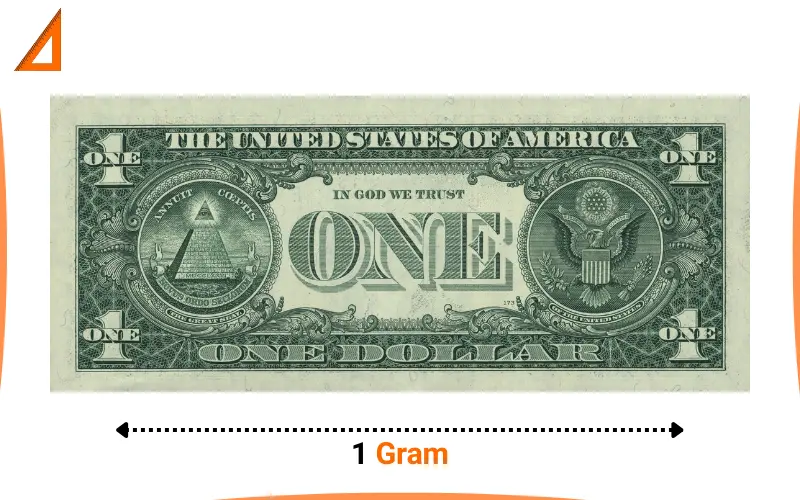
One of the easiest examples is something many people carry every day.
Take a dollar bill out of your wallet and hold it by itself. It feels almost weightless. In fact, one bill weighs very close to a gram.
What’s interesting is that a $1 bill and a $100 bill weigh practically the same. So even though one is worth much more, your hand can’t tell the difference.
2. One Raisin
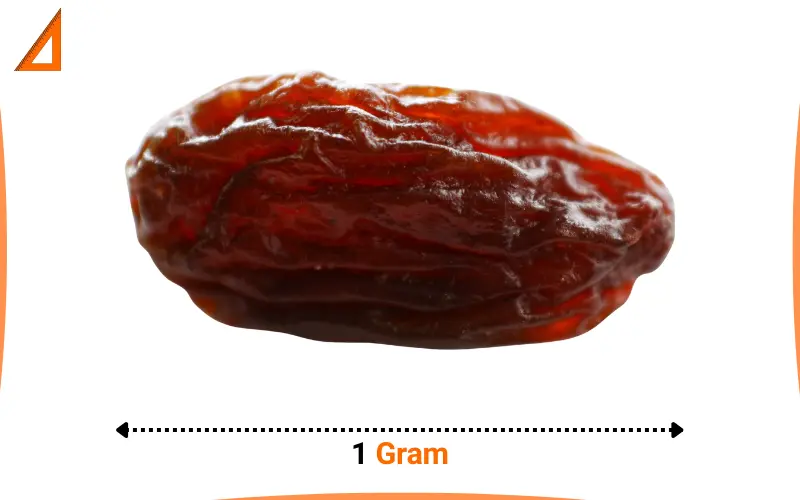
If you’ve ever grabbed a handful of raisins, you’ve probably held 20 or 30 grams without even thinking about it.
But a single raisin? That’s a different story.
Pick one up and drop it into your palm. It doesn’t seem like much, but it weighs surprisingly close to one gram. That’s one reason raisins are often used when explaining tiny weights.
3. A Small Paper Clip
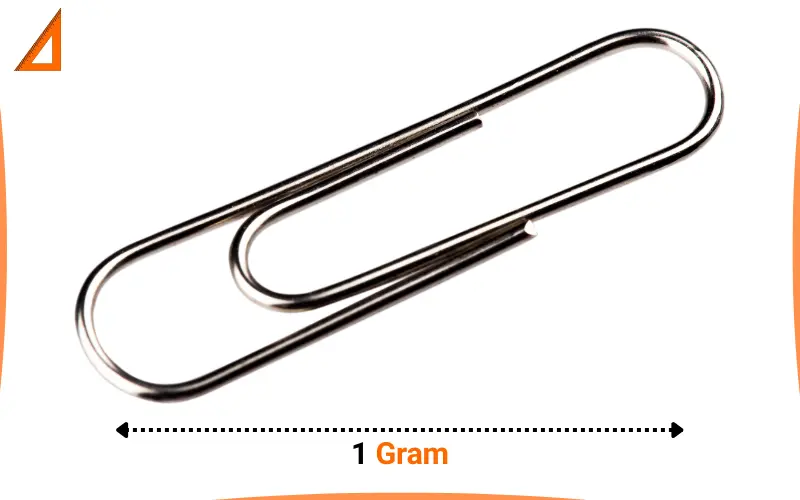
Paper clips are one of those things people stop noticing because they’re everywhere.
There’s probably one hiding in a drawer somewhere right now. Pick it up, and you’ll understand why one gram is so hard to feel.
By itself, it barely weighs anything. But a handful of paper clips suddenly feels much heavier than you’d expect.
4. A Coffee Bean
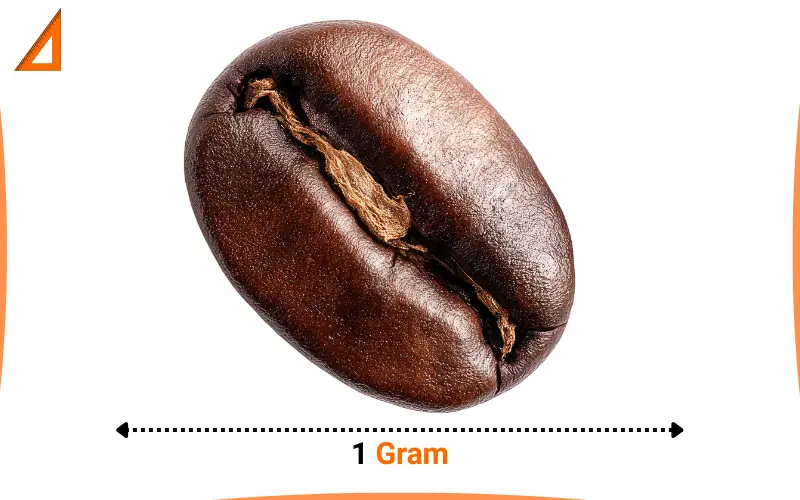
Coffee drinkers might enjoy this one.
A single roasted coffee bean weighs around a gram. That doesn’t sound impressive until you think about how many beans go into one cup of coffee.
One bean feels tiny. A handful feels completely different. That’s how quickly small weights add up.
5. A Jelly Bean
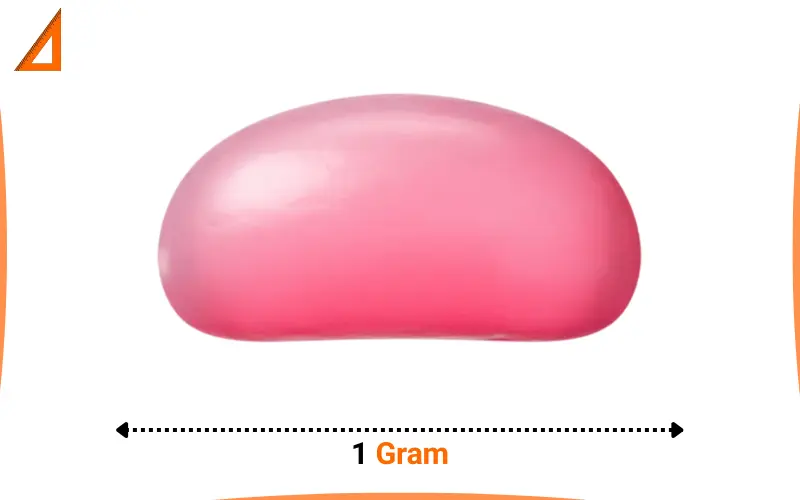
Most people don’t stop to think about how much candy weighs.
You unwrap a jelly bean, toss it into your mouth, and move on. But before you eat it, that little piece of candy sitting in your hand weighs close to a gram.
It’s amazing how something so small can contain so much flavor and still barely register any weight.
6. A Postage Stamp
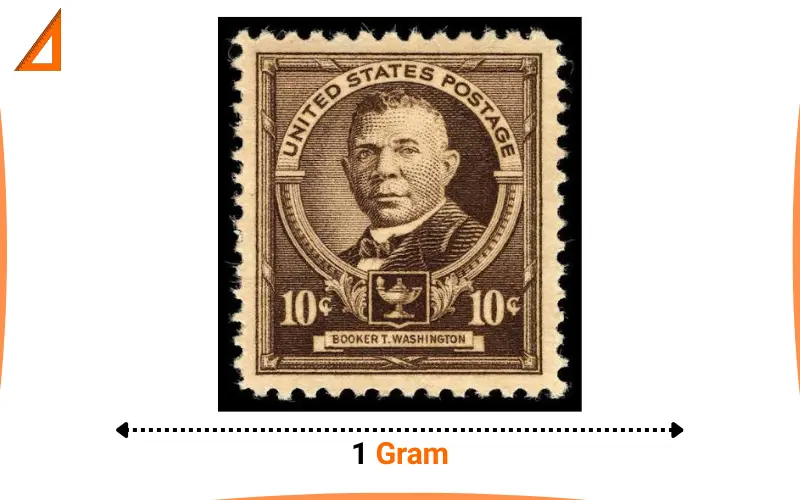
Stamps were designed to add almost no weight to mail.
That’s why a single stamp weighs around a gram. If you’ve ever peeled one off a sheet, you probably noticed how thin and delicate it feels.
By itself, it’s almost impossible to feel, which makes it a perfect example of just how light one gram really is.
7. A Vitamin Tablet
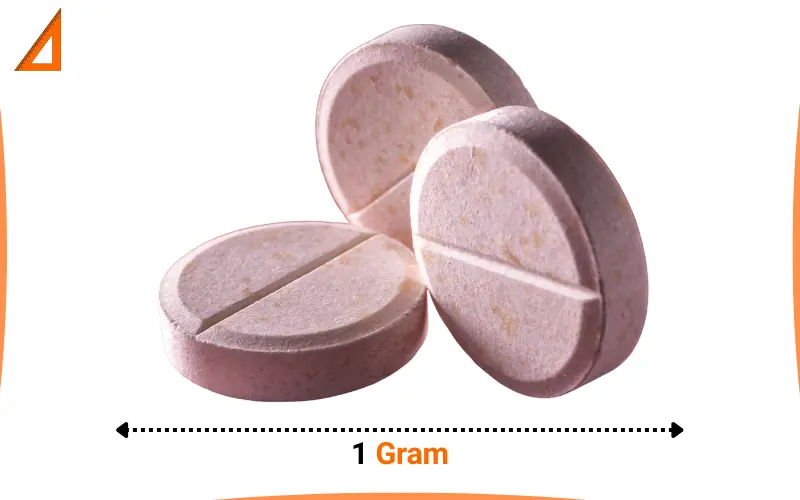
Millions of people take vitamins every morning without ever thinking about their weight.
A small tablet sitting in your hand weighs about a gram. You swallow it in seconds, but before that, you’re holding something surprisingly close to the same weight as a dollar bill.
8. One Playing Card
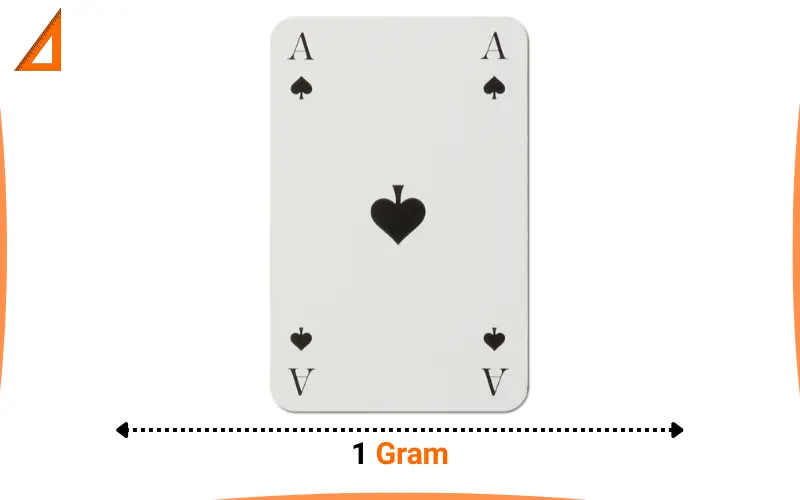
Think about the last time you shuffled a deck of cards.
A whole deck has some weight to it, but one card by itself feels like almost nothing. That’s because a single playing card weighs roughly a gram.
It’s funny how 52 cards together feel substantial, while one card seems weightless.
9. A Small Safety Pin
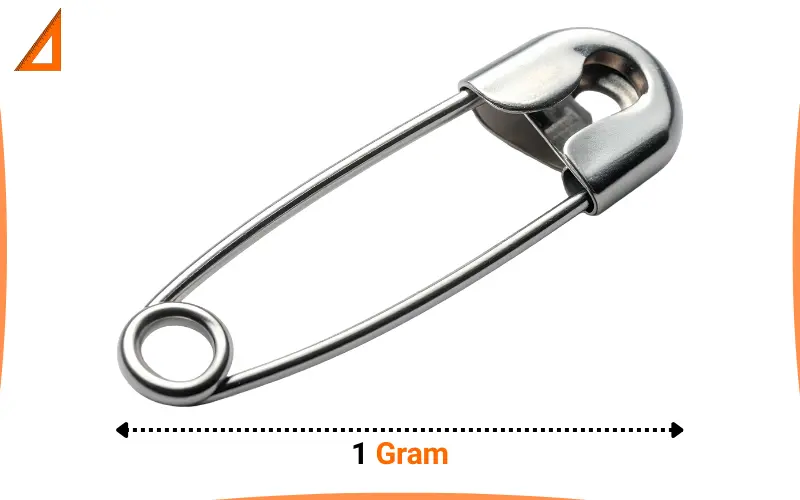
Chances are you’ve got a few safety pins sitting somewhere in a drawer, sewing kit, or first-aid box.
Pick one up and it doesn’t seem like much. It’s tiny, easy to lose, and light enough to forget about. But that little piece of metal weighs surprisingly close to one gram.
Most people don’t think twice about safety pins until they need one. Yet they’re a good reminder that small objects can still have measurable weight.
10. A Business Card
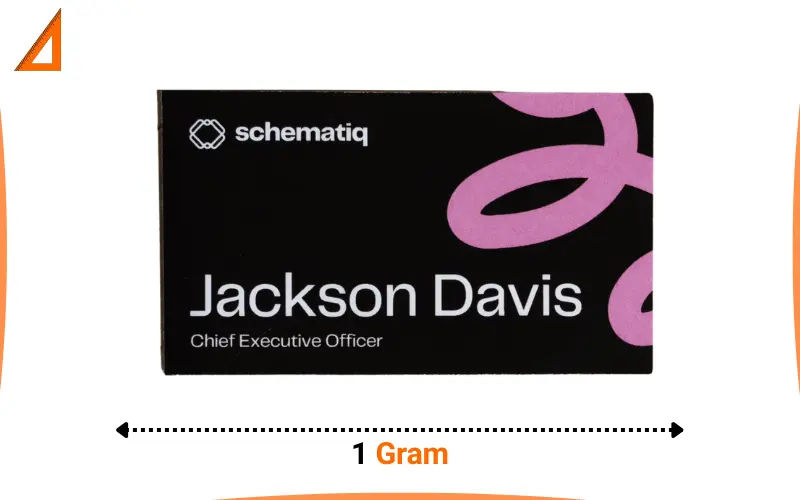
After trade shows or conferences, people often come home with pockets full of business cards.
One card by itself doesn’t feel like anything special. In fact, you could probably hold one between two fingers and forget it’s even there. But stack twenty or thirty together and suddenly you notice the weight.
That’s because a single business card weighs around a gram.
11. One Almond
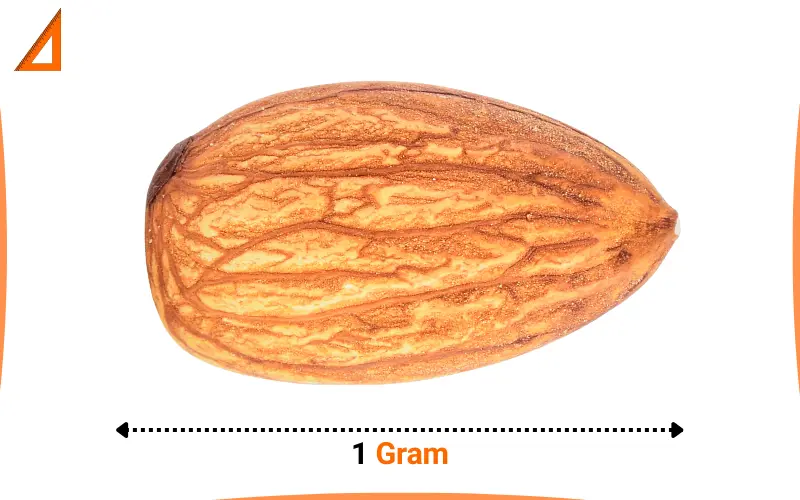
People are usually surprised by this one.
If you grab a handful of almonds, it feels like a decent snack. But one almond by itself weighs roughly a gram.
Next time you’re eating mixed nuts, try holding just one. It seems almost too small to matter, but a bowl full of them adds up quickly.
12. A Thumbtack
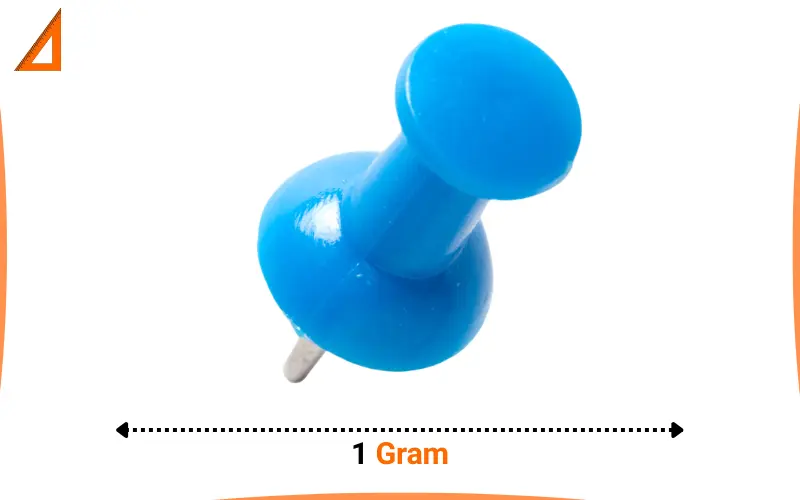
Teachers and office workers have probably handled hundreds of thumbtacks over the years.
You push one into a bulletin board and never really think about it again. But before it disappears into the cork, that tiny pin in your fingers weighs close to one gram.
It’s one of those everyday objects that proves how light a gram actually is.
13. Half a Teaspoon of Sugar
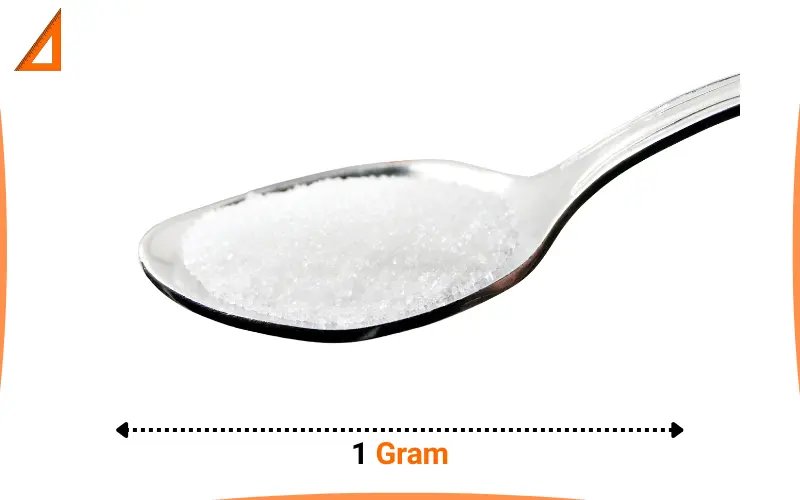
Think about sweetening a cup of tea.
Most people pour sugar without measuring, but half a teaspoon comes surprisingly close to one gram. It doesn’t look like much sitting in a spoon, yet that tiny amount is enough to change the taste.
Cooking and baking are full of these little measurements that seem insignificant until you realize how often they matter.
14. A Small Earring
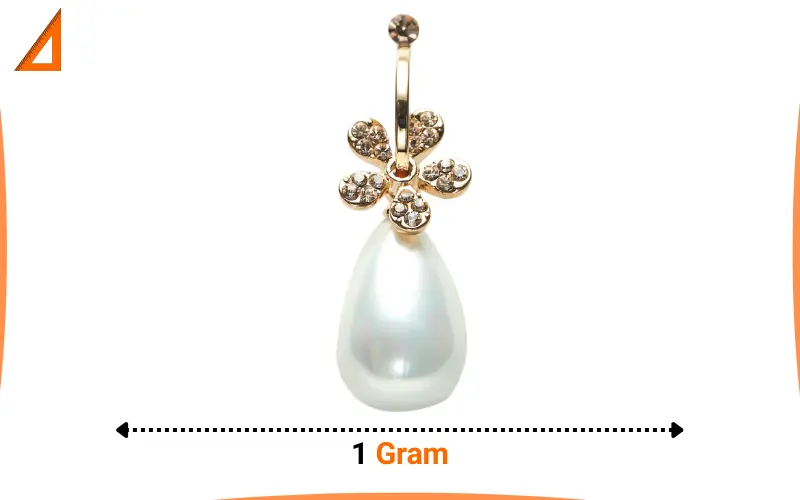
Lightweight earrings are designed so you can wear them all day without noticing them.
And that’s exactly the point.
A simple stud earring often weighs around a gram. Wear it for a few hours and you forget it’s even there, which tells you just how light a gram really is.
15. A Piece of Chewing Gum
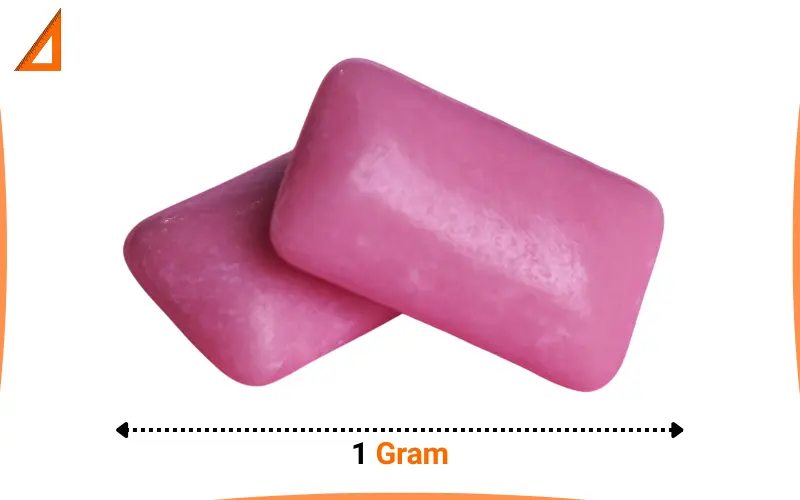
Before you unwrap it, a stick of gum doesn’t seem like much.
You pull it out, pop it into your mouth, and that’s the end of it. But that tiny piece weighs around one gram.
It’s funny how something you chew for thirty minutes starts out weighing almost exactly the same as a dollar bill or a raisin.
Is One Gram Heavy Or Light?
Compared to most things we hold every day, one gram is incredibly light.
For example:
- A smartphone weighs around 200 grams.
- A golf ball weighs about 46 grams.
- A slice of bread weighs roughly 25 grams.
That means you’d need around 200 one-gram objects just to equal the weight of your phone.
1 Gram vs 5 Grams
Five grams still isn’t much, but you can definitely feel the difference.
Imagine:
- Five raisins
- Five dollar bills
- Five coffee beans
By themselves they feel tiny, but together they suddenly feel much more noticeable.
Here we have more guides on measurement here:
- how big is 2 mm
- how long is 1 inch
- how much is 5 oz
- how much is 4 oz
- how much is 3 oz
- how much is 2 oz
FAQs
What weighs exactly 1 gram?
A dollar bill is one of the closest everyday examples.
What weighs one gram at home?
Paper clips, raisins, coffee beans, stamps, and thumbtacks are common examples.
Is one gram heavy?
Not at all. Most people can barely feel one gram in their hand.
How many milligrams are in a gram?
There are 1,000 milligrams in one gram.
What food weighs about one gram?
A raisin, coffee bean, jelly bean, or almond are all close.
Can I estimate one gram without a scale?
Yes. A dollar bill or paper clip gives a surprisingly good estimate.
Why are grams used so often?
Because they’re perfect for measuring small amounts accurately.
Conclusion
One gram may not sound like much, but once you connect it with familiar things, it suddenly becomes easier to picture. A raisin, a paper clip, a dollar bill, or even a piece of gum can help you understand what a gram really feels like.
The funny thing is that most of us handle one-gram objects every single day without paying attention. Once you start noticing them, you’ll realize just how often this tiny unit of weight shows up in everyday life.