

You need to know what weighs 100 grams and there’s no scale in sight. Maybe you’re portioning food, checking a package before shipping, or just genuinely curious. Whatever the reason — you’re about to have a bunch of new answers.
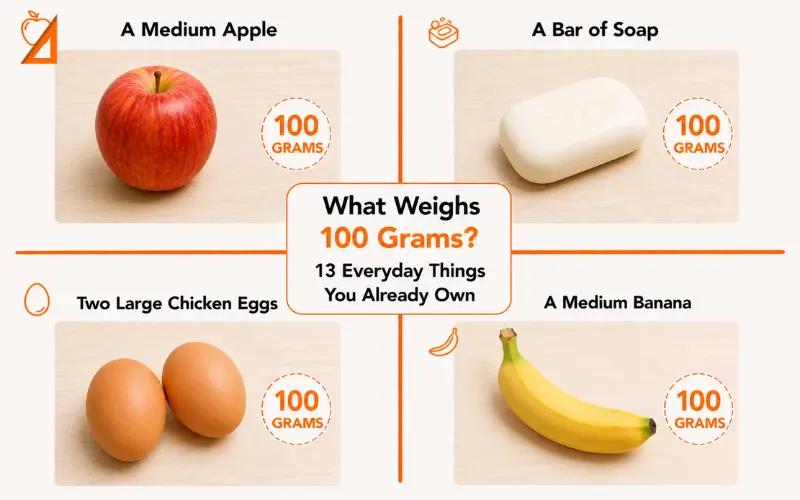
Here’s something most people don’t realize: 100 grams is lighter than they think. Pick up a medium apple. That’s it. That’s 100 grams sitting right there in your hand.
Once you read through this list, you’ll spot 100-gram objects everywhere you go. Let’s get into it.
How Heavy Is 100 Grams? Fast Conversion
Here’s how heavy 100 grams is in other units — quick and simple.
| Unit | 100g Equals |
|---|---|
| Ounces | 3.527 oz |
| Pounds | 0.220 lbs |
| Kilograms | 0.1 kg |
| Milligrams | 100,000 mg |
| Tablespoons of Water | ~6.76 tbsp |
Related Post: What weighs 10 gram
What Does 100 Grams Look Like?
It looks smaller than most people expect.
Cup your palm and imagine a medium apple sitting in it. That’s 100 grams. It fills your hand without feeling heavy — your wrist won’t even notice it.
The tricky part is that 100 grams looks completely different depending on what it is. Half a cup of uncooked rice is 100 grams — a small, compact mound. But 100 grams of fresh spinach is a giant overflowing pile. Same weight, totally different size. That’s just density at work.
As a solid object, think of a bar of soap or a deck of cards sitting on a table. Unremarkable, small, easy to overlook. That’s what 100 grams looks like — nothing dramatic. Just a light, everyday object you walk past without a second thought.
13 Things That Weigh Around 100 Grams
| Object | Approximate Weight |
|---|---|
| Twenty US Nickels | 5g × 20 = Exactly 100 Grams |
| Medium Apple | About 95–110 Grams |
| Deck of Playing Cards | About 80–100 Grams |
| Bar of Soap | About 90–113 Grams |
| Two Large Chicken Eggs | 50g × 2 = About 100 Grams |
| Half a Cup of Uncooked White Rice | About 98–102 Grams |
| Large Lemon | About 90–115 Grams |
| Box of 100 Paperclips | About 100 Grams |
| Medium Banana (Peeled) | About 80–105 Grams |
| Medium Tomato | About 100–120 Grams |
| Compact Smartphone (Without Case) | About 95–120 Grams |
| Small Avocado | About 90–110 Grams |
| Five Standard Highlighter Pens | 18–22g Each × 5 = About 100 Grams |
1. Twenty US Nickels
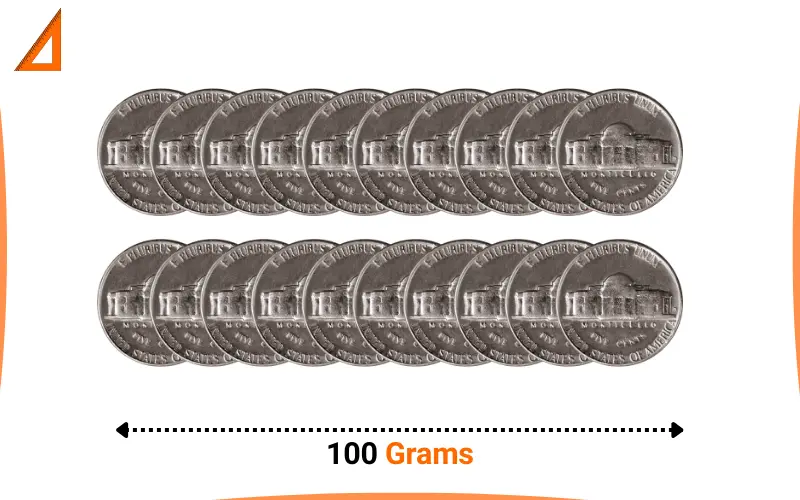
This one is dead accurate and you can do it right now.
A US nickel weighs 5 grams. The US Mint locked that in back in 1866 and it hasn’t moved since. Count out twenty nickels — doesn’t matter if they’re from 1992 or last year — and you’re holding exactly 100 grams. No estimation, no rounding.
Serious home bakers use this exact trick to test if their kitchen scale is reading correctly. Four nickels for 20g, ten for 50g, twenty for 100g. It’s the most reliable thing on this entire list because a government standard controls the weight, not a factory somewhere cutting corners.
Weight: 5g × 20 = exactly 100 grams
2. A Medium Apple
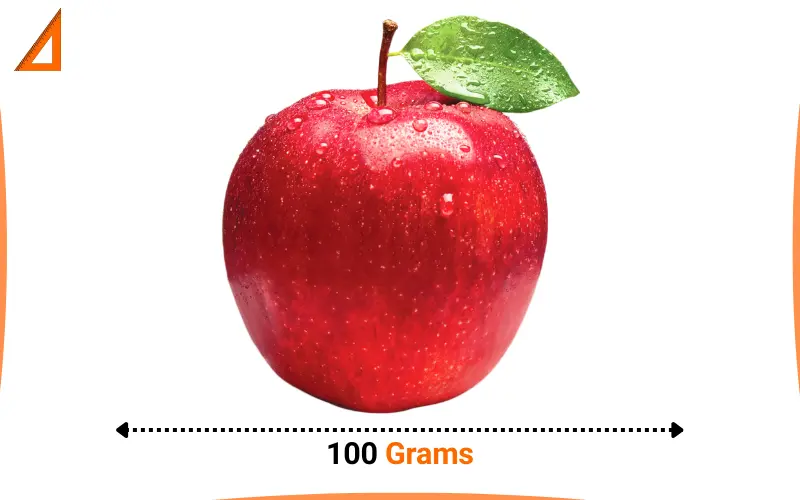
This is probably the easiest one to remember.
Grab a medium apple at the grocery store — nothing huge, nothing tiny. A Fuji, a Gala, a Honeycrisp — doesn’t really matter. That apple sitting in your palm is sitting right around 95 to 110 grams. The USDA even uses 100 grams as the standard reference weight when listing apple nutrition facts.
The big ones you see at farmers markets? Those are pushing 180–200 grams. The small snack-size ones? More like 70 grams. But that regular, everyday, toss-it-in-your-bag apple — that’s your 100-gram fruit reference locked in.
Weight: ~95–110 grams
3. A Deck of Playing Cards
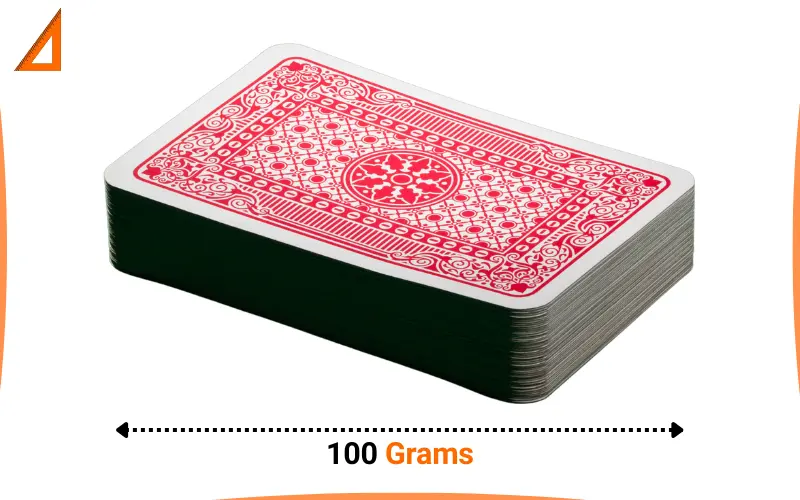
Pull a sealed deck of Bicycle cards out of a drawer and you’re holding about 94 grams.
Casino-grade decks with thicker card stock push closer to 100 grams. Budget paper decks can drop to 80 grams. But a standard, everyday playing card deck sits close enough to 100 grams that most people use it as a reference without thinking twice.
It’s also a good shape reference — that flat, rectangular, compact feel of a card deck in your hand is what how much is 100g feels like as a solid object.
Weight: ~80–100 grams
4. A Bar of Soap
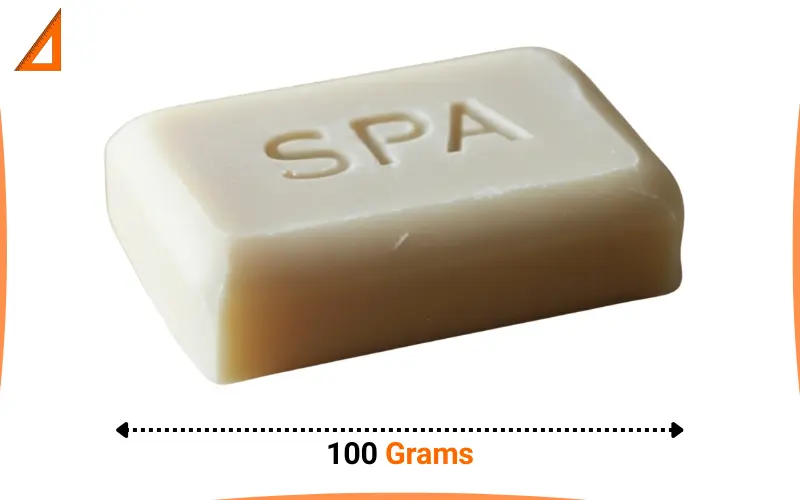
Most soap bars at a drugstore or supermarket are made to weigh between 90 and 113 grams. The classic 100-gram bar is one of the most common soap sizes globally, especially in travel and hotel formats.
A Dove or Ivory bar comes in at around 3.5 to 4 oz, which puts it at 99–113 grams. Use one for a week and it’ll shed a few grams and land right at 100. Fresh out of the wrapper, it’s hovering just above.
That firm, dense feel of a new soap bar — solid but not heavy — is exactly what how heavy is 100g feels like in your hand.
Weight: ~90–113 grams
5. Two Large Chicken Eggs
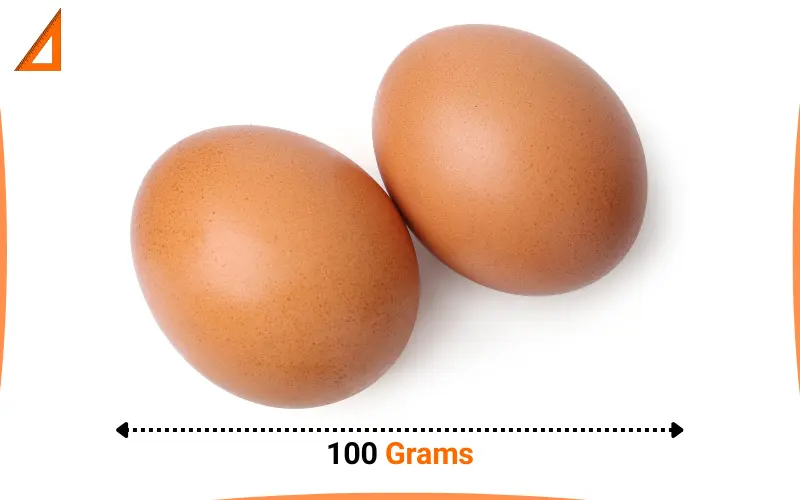
One large egg from a grocery store carton weighs about 50 grams with the shell. Two of them is 100 grams.
The USDA grades eggs by weight — large eggs fall between 50 and 56 grams each. So two large eggs placed on a scale will land somewhere between 100 and 112 grams, depending on the individual eggs. For a quick reference, two eggs is your go-to.
Crack them open and weigh just the contents — no shell — and you’re looking at around 86 to 90 grams. Still close, but the shell adds that extra bit to hit 100.
Weight: ~50g × 2 = ~100 grams
6. Half a Cup of Uncooked White Rice
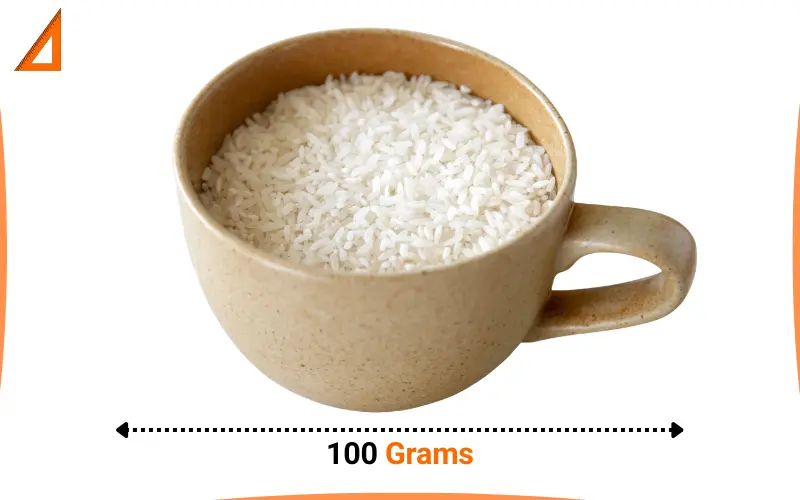
This one surprises people. Half a US cup of dry, uncooked white rice weighs almost exactly 100 grams.
The density of uncooked rice keeps this consistent across varieties. Jasmine, basmati, long-grain, short-grain — they all land within a gram or two of each other at this volume. Brown rice runs a touch heavier because the bran layer is still on.
If you cook rice often, you’ve been handling 100-gram portions without realizing it. Half a cup, dry, straight from the bag — that’s your 100-gram kitchen reference.
Weight: ~98–102 grams
7. A Large Lemon
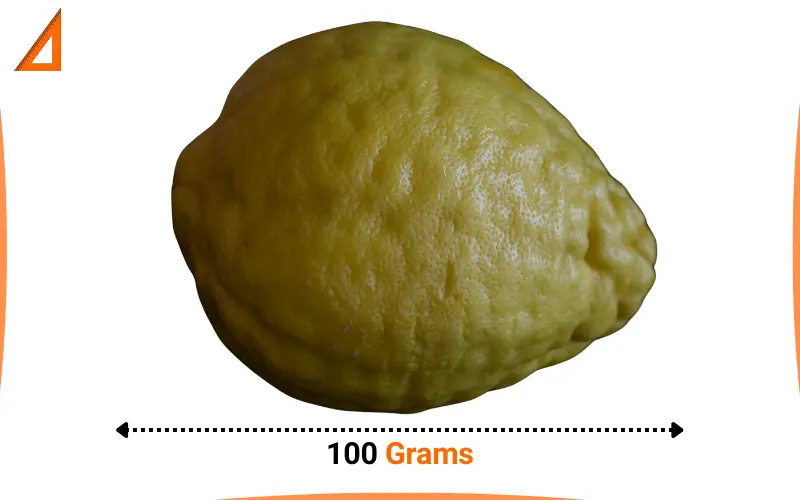
Pick up a large, fresh lemon — the kind that feels heavy and full of juice — and you’re likely holding somewhere between 90 and 115 grams.
A lemon that feels dense for its size is a juicy one, and juicy ones weigh more. A dried-out, light lemon might be 65 grams. But that bright yellow, firm, large lemon sitting in your fruit bowl right now is almost certainly around 100 grams.
It’s also one of the more satisfying objects to hold as a weight reference — round, smooth, fits the palm.
Weight: ~90–115 grams
8. A Box of 100 Paperclips
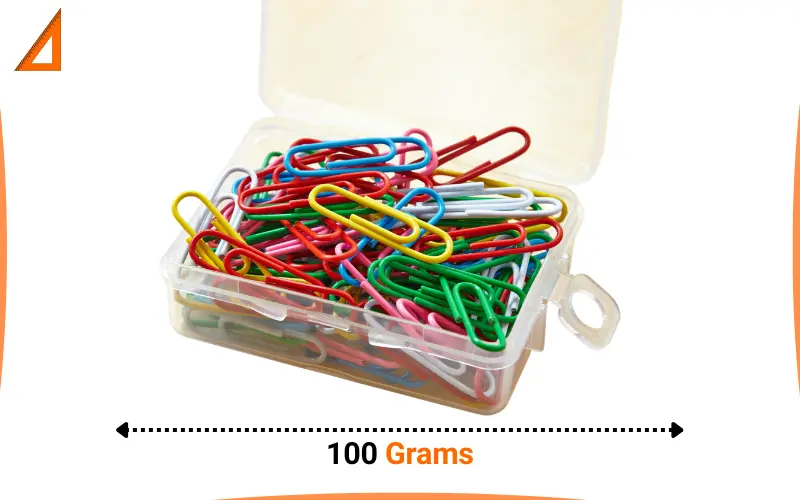
A standard #1 paperclip — the regular silver ones in every office — weighs about 1 gram each. A full box of 100 comes to almost exactly 100 grams.
Most boxes even say “100 count” on the label, so you always know what you’ve got. This one is also a good demonstration of scale: 100 tiny, nearly weightless objects that together equal the weight of a medium apple.
Weight: ~100 grams
Related Post: What weigh 1 gram
9. A Medium Banana
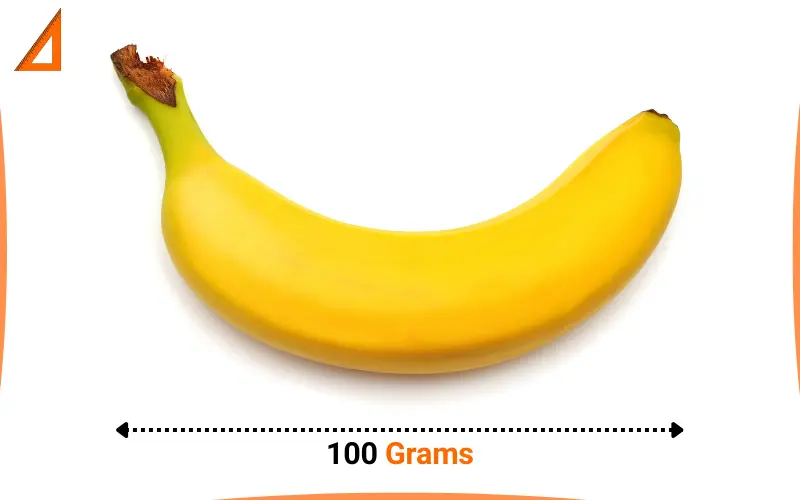
A peeled, medium banana weighs between 80 and 105 grams depending on size. The USDA uses 100 grams as the standard reference weight for banana in all their nutritional data.
The banana that’s maybe 7 inches long, the one you’d grab without thinking at a coffee shop or convenience store — that’s your 100-gram reference. Not the small ones, not the massive ones. Just a regular banana.
With the peel still on, add about 30 to 40 grams on top.
Weight: ~80–105 grams (peeled)
10. A Medium Tomato
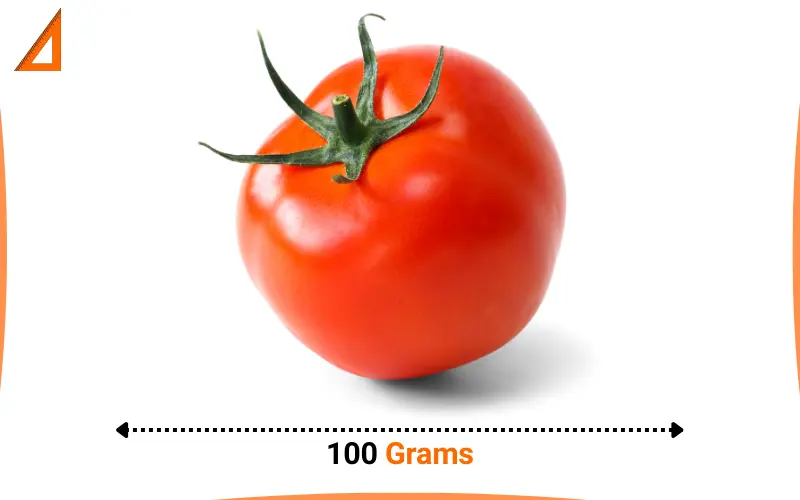
A medium tomato — not a cherry tomato and definitely not a giant beefsteak — weighs right around 100 to 120 grams. Roma tomatoes run smaller, around 60–70 grams. Those enormous beefsteaks can push 200–300 grams.
The everyday slicing tomato you’d put on a sandwich, roughly the size of a tennis ball? That’s your 100-gram tomato. The USDA lists 100 grams as the standard reference weight for raw tomato in their nutritional databases too, so it’s a measurement the food world already uses constantly.
Weight: ~100–120 grams
11. A Compact Smartphone (Without Case)
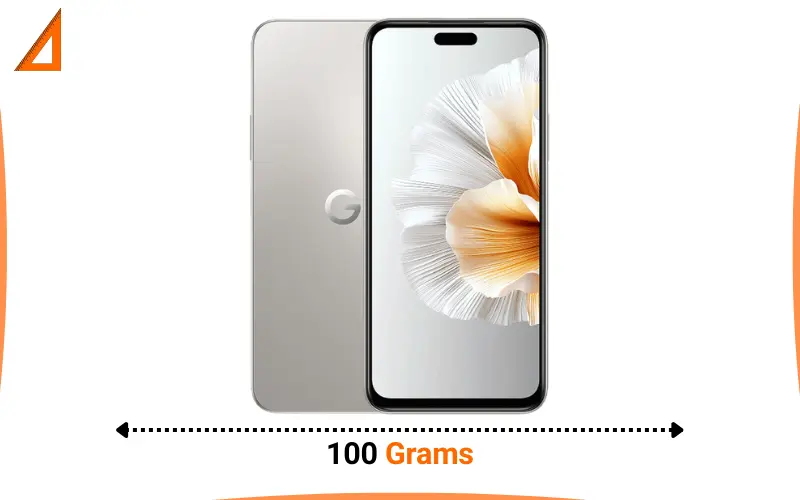
Slim, older smartphones without a case come in right around 100 grams. Not the chunky modern flagships — those are 170–230 grams now. But older, compact phones from around 2018–2022 hit this mark.
The reason it’s worth mentioning is that most people have held a phone every single day for years. If you remember a phone that felt light — almost surprisingly light — it was probably sitting around 100 grams. That sensation is your physical memory of what what weighs 100g actually feels like.
Weight: ~95–120 grams (slim/compact models)
12. A Small Avocado
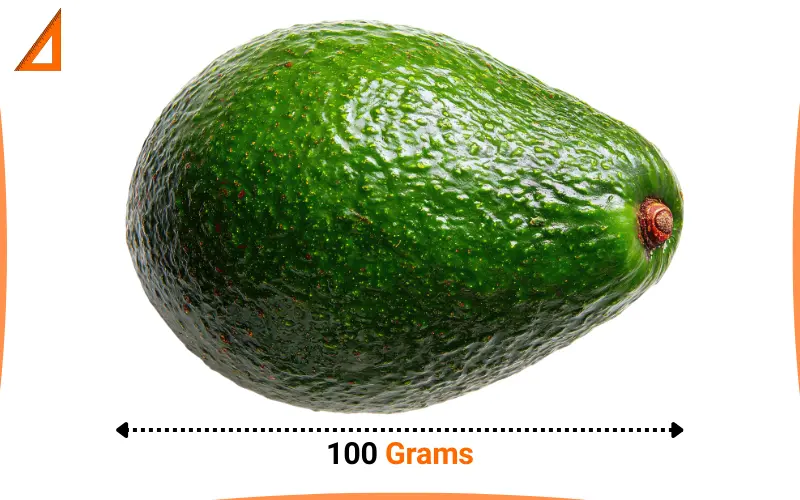
A small Hass avocado — the kind with the dark, bumpy skin — weighs around 90 to 110 grams whole. Once you scoop out the flesh and ditch the skin and pit, you’re left with about 60 to 75 grams of actual avocado.
The whole fruit in your hand, uncut, is your 100-gram reference here. It’s one of those grocery store items where the weight feels exactly right for the size — not too light, not surprisingly heavy.
Weight: ~90–110 grams (whole)
13. A Standard Highlighter Pen (Two of Them)
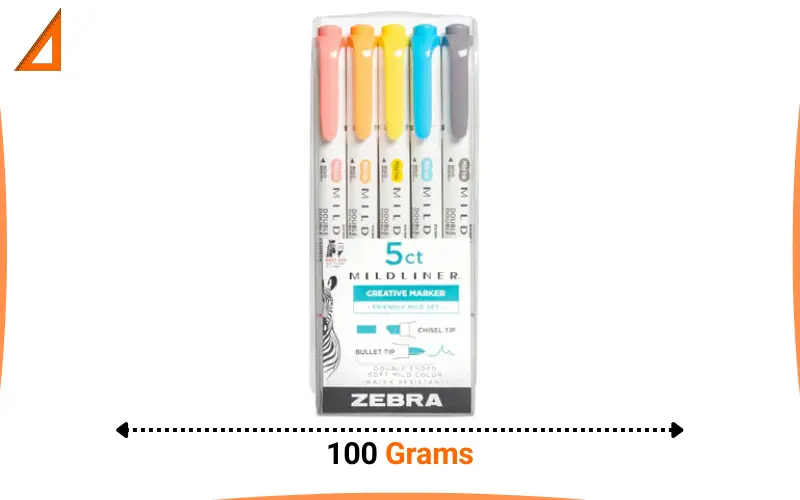
A fresh, new highlighter pen — a Sharpie, a Zebra, any standard chisel-tip marker — weighs about 18 to 22 grams straight out of the pack. Two of them together lands right at 40 grams, so five highlighters gets you to 100 grams.
Actually, a better use of this reference: grab two highlighters and a AAA battery (about 20 grams). That trio is sitting around 58–62 grams. Add two more highlighters and you’re at 96–102 grams.
Or just remember: five new highlighters = roughly 100 grams.
Weight: ~18–22g each × 5 = ~100 grams
Related Post: What weighs 20 grams
100 Grams vs Other Weights — How Does It Compare?
This is where things get interesting. Knowing what weighs 100g is useful. But knowing where it sits on the weight scale — above and below — gives you a much sharper sense of this measurement.
The Full Picture: 10g to 1kg
| Weight | Real Object | Compared to 100g |
|---|---|---|
| 10g | Two US Nickels | 10× Lighter |
| 20g | Four US Nickels | 5× Lighter |
| 50g | One Large Chicken Egg | Half of 100g |
| 100g | Medium Apple — Your Mark | Reference Point |
| 200g | Two Medium Apples | Double — Noticeably Heavier |
| 250g | Standard Stick of Butter | 2.5× Heavier |
| 500g | Bag of Pasta | 5× Heavier — Real Heft |
| 1,000g | Bag of Sugar | 10× Heavier |
50g vs 100g
50 grams and 100 grams are the same relationship as one egg and two eggs. Or ten nickels and twenty. On paper it sounds obvious — one is double the other. But when you hold them back to back, the jump feels bigger than you’d expect. 50 grams barely registers. 100 grams you actually feel.
100g vs 200g
This is a jump most people notice straight away. 200 grams starts crossing into “there’s something real in my hand” territory. Two medium apples stacked, or a full stick of butter plus a bit extra. At 100 grams you might forget you’re holding something. At 200 grams you won’t.
100g vs 500g
Five times heavier — and it shows. 500 grams is a bag of pasta, a small hardcover book, or a mid-size kitchen tool. It has serious weight to it. Holding 500 grams and 100 grams back to back makes 100 grams feel almost nothing. This comparison is super useful when you’re estimating shipping weights or packing a travel bag.
Why This Comparison Matters
Most people who look up weight references stop at finding one object for one weight. But building a mental scale — knowing that 100g is double a single egg, one-fifth of a bag of pasta, one-tenth of a bag of sugar — means you stop guessing and start estimating accurately. That’s the whole point.
How to Measure 100 Grams Without a Scale
Twenty nickels. That’s genuinely the best answer. Stack them, weigh them — exactly 100 grams, no tools needed. If you want to weigh something, make a simple balance with a ruler on a pencil and compare your object against the coin stack.
100ml of water. Water weighs 1 gram per milliliter at room temperature. Pour exactly 100ml into a measuring cup and you have a perfect 100-gram liquid reference. More accurate than any household object on this list.
A kitchen scale. If you’re doing this regularly — cooking, shipping, portioning — a basic digital kitchen scale costs $10 to $15. Worth it.
Here we have more guides on weight easily
- How much is 10 oz
- How much is 9 oz
- How much is 8 oz
- How much is 7 oz
- How much is 6 oz
- How much is 5 oz
- How much is 4 oz
FAQs
What weighs 100 grams exactly?
Twenty US nickels. That’s the most precise answer you’ll get without a scale. 100ml of water is equally exact. Everything else on this list is a close reference, not a guarantee.
How heavy is 100 grams in ounces?
3.527 ounces. Just over three and a half ounces, and less than a quarter pound (which is 113 grams).
How heavy is 100g of food?
It depends on the food. A medium apple is about 100 grams. So is a medium banana or a large lemon. Two large eggs hit 100 grams together. Half a cup of dry rice is 100 grams. These are the most useful kitchen references.
What weighs 100g in coins?
Twenty US nickels at 5 grams each. That’s the cleanest coin reference anywhere. Forty US dimes comes to about 90.7 grams — close but not exact. For anything that needs to be precise, use nickels.
Is 100 grams heavy?
Not really. At 3.5 ounces it’s light — less than a quarter pound. A golf ball is 46 grams. A baseball is 142 grams. 100 grams sits right between them. You’ll feel it in your hand but it won’t feel like much.
Wrapping Up
100 grams is lighter than most people picture it — just 3.5 ounces, the weight of a medium apple or a fresh bar of soap. But once you’ve got a few references locked in, you’ll stop second-guessing this measurement completely.
The three you should actually remember:
- 20 nickels — exactly 100g, works every time
- Half a cup of dry rice — kitchen-ready reference
- A medium apple or lemon — grab one anywhere
And now that you know where 100g sits next to 50g, 200g, and 500g — you’ve got the full picture, not just one data point.