
Sixteen inches equals 40.64 centimeters (406.4 millimeters), but numbers alone don’t always help you picture the actual size. If you’ve ever wondered how long is 16 inches, the easiest way to understand it is by comparing the measurement with familiar objects you see every day. Looking at real items creates a much clearer mental image than simply reading a conversion chart.
Although 16 inches isn’t discussed as often as one foot (12 inches) or 15 inches, it’s an extremely practical measurement used across many industries. Manufacturers frequently build products around this size because it offers more usable space while still remaining portable. You’ll find 16-inch measurements in construction materials, workshop tools, kitchen accessories, sports gear, and everyday household items.
In this guide, you’ll discover 10 everyday things that are exactly 16 inches long, along with practical explanations, size comparisons, and measuring tips. By the end, you’ll have a much better understanding of how big is 16 inches and be able to estimate this measurement confidently without always reaching for a ruler.
Quick Conversions
| Unit | 16 Inches Equals |
|---|---|
| Centimeters | 40.64 cm |
| Millimeters | 406.4 mm |
| Feet | 1.333 ft |
| Meters | 0.4064 m |
The conversion that’s easiest to remember is: 16 inches = 40.64 centimeters
Since many manufacturers display both imperial and metric measurements on product specifications, knowing this conversion makes comparing dimensions much easier.
How Big Is 16 Inches?
If you place a standard 12-inch ruler on a table, then imagine adding another 4 inches, you’ll have a very accurate picture of 16 inches. Those additional four inches create a surprisingly noticeable difference, making products feel substantially larger than many people expect.
Compared with popular 13-inch or 14-inch products, 16 inches offers considerably more working area. Whether it’s a toolbox, a pizza, or a kitchen accessory, that extra space often improves comfort and functionality without making the product difficult to carry.
This is one reason 16 inches has become a favorite measurement across industries. It provides enough length for serious work while remaining compact enough for homes, offices, vehicles, and workshops.
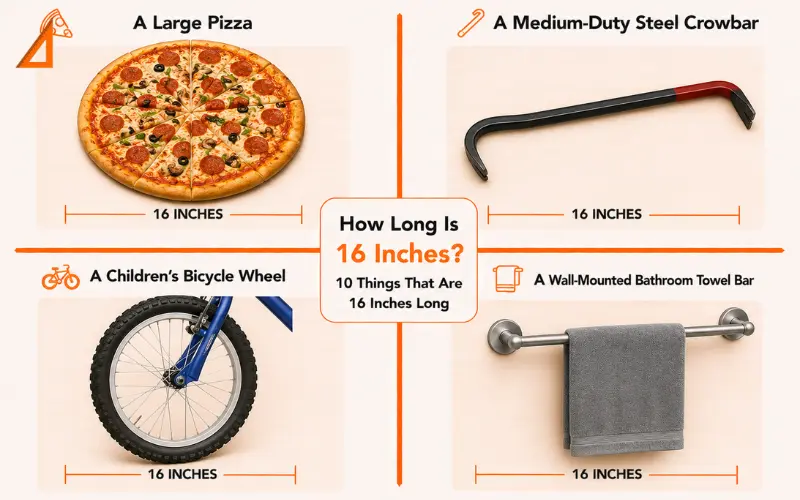
10 Everyday Things That Are Exactly 16 Inches Long
| Object | Size | |
|---|---|---|
| 1 | Standard Concrete Masonry Block (Cinder Block) | Exactly 16 inches (nominal length) |
| 2 | Large Pizza | Around 16-inch diameter |
| 3 | Wooden Rolling Pin | Around 16 inches overall |
| 4 | Medium-Duty Steel Crowbar | Around 16 inches long |
| 5 | Children’s Bicycle Wheel | Exactly 16-inch diameter (industry standard) |
| 6 | Plastic Storage Bin | Around 16 inches long |
| 7 | Portable Whiteboard | Around 16 inches wide |
| 8 | Regulation Mason’s Level | Exactly 16 inches |
| 9 | Wall-Mounted Bathroom Towel Bar | Around 16 inches wide |
| 10 | Compact Guitar Practice Amplifier | Around 16 inches tall |
1. A Standard Concrete Masonry Block (Cinder Block)
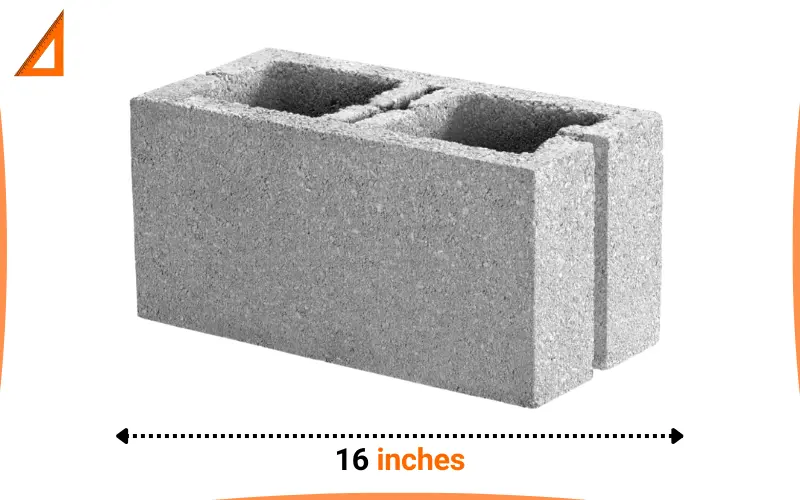
One of the best real-world examples of 16 inches is a standard concrete masonry block, often called a cinder block. In construction, these blocks are manufactured to a nominal length of exactly 16 inches, making them one of the most reliable size references available.
Builders use standardized block dimensions because they simplify wall layouts, reduce cutting, and make estimating construction materials much easier. Since these blocks have been manufactured using the same standard for decades, they’re recognized worldwide throughout the construction industry.
Compared with a standard 12-inch ruler, a concrete block is exactly 4 inches longer, making the difference easy to visualize. Because this measurement follows an industry standard rather than an estimate, it’s one of the most accurate everyday references for understanding how long is 16 inches.
Size: Exactly 16 inches (nominal length)
2. A Large Pizza
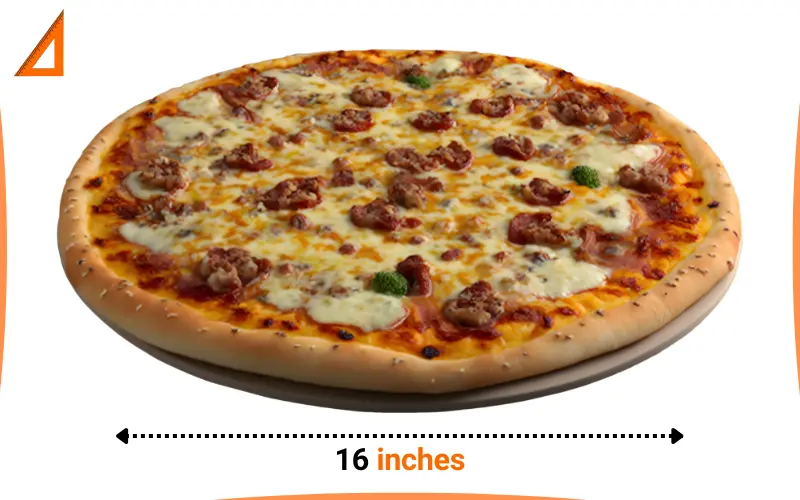
One of the most relatable examples of 16 inches is a large pizza. Many pizzerias and major chains across the US bake their large-size pizzas at a 16-inch diameter, making it one of the few 16-inch objects most people have actually measured with their own eyes — usually right before eating it.
Pizzerias standardize around this size because it comfortably feeds four to six people while still fitting inside a standard oven and most delivery boxes. It’s also become a familiar visual shorthand in everyday conversation, since most people already know roughly what a “large pizza” looks like on a table.
Compared with a medium 12-inch pizza, a 16-inch pizza is a full 4 inches wider in diameter, giving noticeably more slices and surface area. It’s an easy, memorable way to picture this measurement without needing a ruler at all.
Size: Around 16 inches in diameter
3. A Wooden Rolling Pin
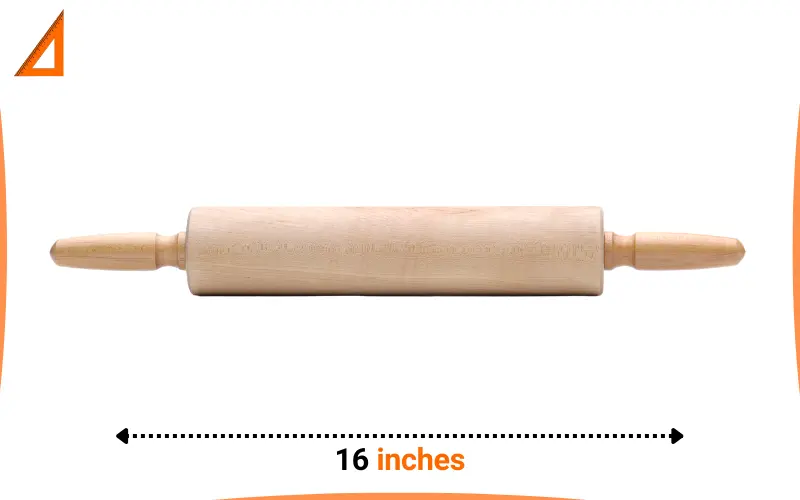
Many traditional wooden rolling pins measure about 16 inches from handle to handle. Bakers use this size because it covers a wider section of dough with each pass while remaining comfortable to grip.
The additional length makes rolling pie crusts, pizza dough, cookies, and pastries much easier. Shorter rolling pins require more passes across the dough, while significantly longer ones become heavier and more difficult to control.
Compared with compact rolling pins around 12 inches, the 16-inch version provides noticeably greater coverage, making baking faster and more efficient for home cooks.
Size: Around 16 inches overall
4. A Medium-Duty Steel Crowbar
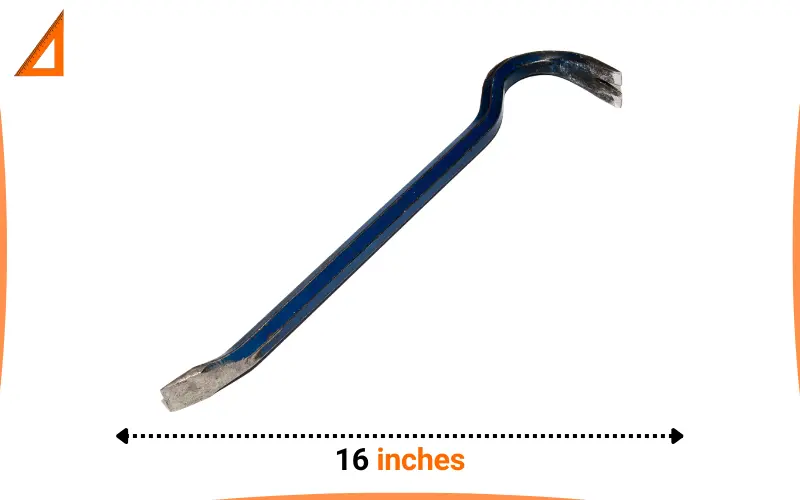
A medium-duty steel pry bar commonly measures close to 16 inches long. This size gives users enough leverage for lifting boards, removing nails, and handling demolition work while remaining compact enough to carry inside a toolbox.
Tool manufacturers choose this length because it creates an excellent balance between strength and portability. Longer pry bars generate more force but become heavier and harder to transport, while shorter versions provide less leverage during demanding jobs.
Compared with common 13-inch hand tools, a 16-inch crowbar produces noticeably greater mechanical advantage, making many construction tasks easier.
Size: Around 16 inches long
5. A Children’s Bicycle Wheel
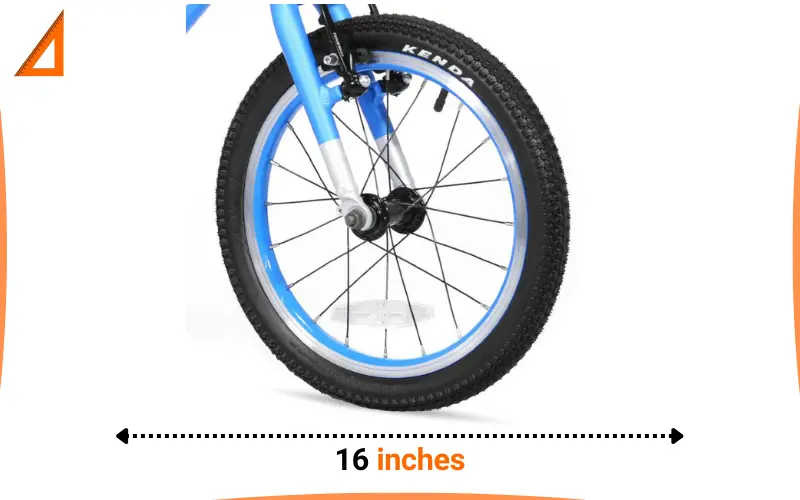
A children’s bicycle wheel is another excellent example of an exact, standardized 16-inch measurement. Bikes designed for young riders — typically kids between roughly 4 and 6 years old — are manufactured with 16-inch wheels as an industry-wide sizing standard, followed consistently by major brands.
Manufacturers rely on this standardized sizing so parents can shop confidently across different bike brands and know the frame, wheel, and tire will all be proportioned correctly for a child’s height. It’s one of the few 16-inch measurements defined by an actual industry sizing chart rather than a rough estimate.
Compared with a standard 12-inch ruler, a 16-inch bike wheel is exactly 4 inches longer in diameter, making the size easy to picture even without seeing the bike in person.
Size: Exactly 16 inches in diameter (industry sizing standard)
6. A Plastic Storage Bin
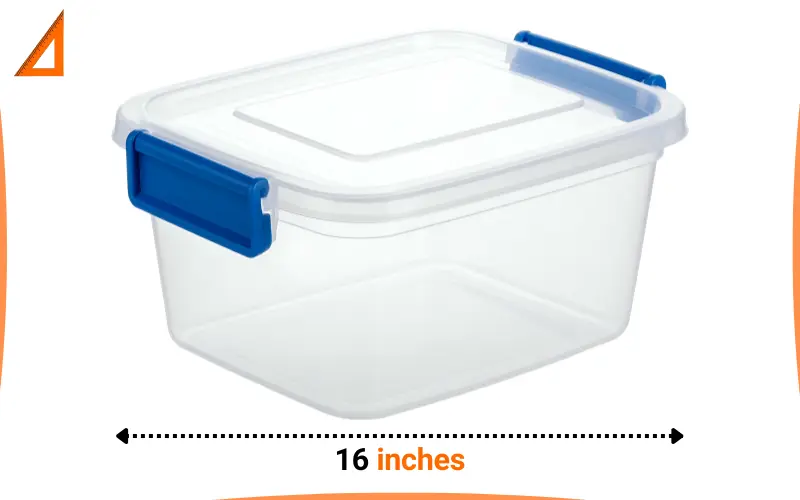
Many compact plastic storage bins designed for closets, shelves, and garages measure around 16 inches long. This size gives homeowners enough room to organize books, toys, clothing, office supplies, or seasonal decorations without taking up too much storage space.
Manufacturers often choose this length because it fits neatly inside popular cube organizers and shelving units while still providing useful storage capacity. A smaller bin may not hold enough items, while a much larger one becomes heavier and harder to move when full.
Compared with 14-inch storage containers, a 16-inch bin offers noticeably more interior volume, making it ideal for organizing larger household items while remaining easy to carry from room to room.
Size: Around 16 inches long
7. A Portable Whiteboard
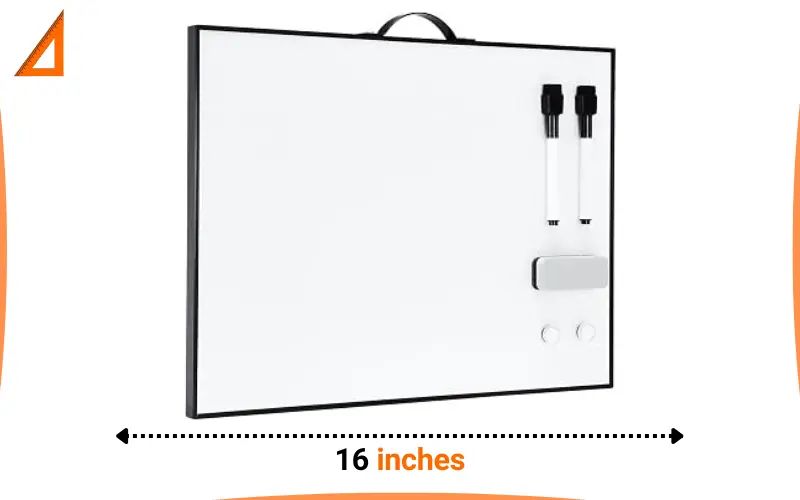
Many portable whiteboards used in classrooms, offices, and home study areas measure close to 16 inches across. This size provides enough writing space for notes, reminders, schedules, or small presentations while remaining lightweight enough to carry with one hand.
Teachers, students, and business professionals often prefer portable whiteboards because they’re easy to move between rooms and store when not in use. The larger writing surface also makes information easier to read compared with smaller memo boards.
Compared with compact 12-inch writing boards, a 16-inch whiteboard gives significantly more room for diagrams, lists, and calculations without becoming bulky.
Size: Around 16 inches wide
8. A Regulation Mason’s Level
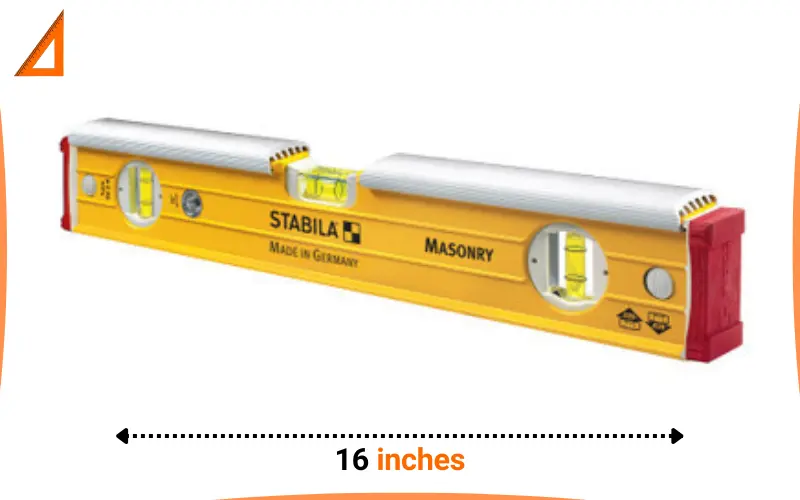
A 16-inch mason’s level is one of the most common leveling tools used by bricklayers, tile installers, and DIY homeowners. Unlike longer levels used for walls or flooring, this compact version is perfect for checking shelves, countertops, bricks, and smaller construction projects.
Manufacturers produce 16-inch levels because they’re easy to carry inside a toolbox while still providing accurate measurements for everyday work. The shorter body also allows users to work comfortably in tighter spaces where larger levels would be difficult to position.
Compared with a standard 12-inch ruler, the additional four inches improve measuring accuracy while keeping the tool highly portable. It’s another excellent real-world example of how 16 inches appears in professional equipment.
Size: Exactly 16 inches
9. A Wall-Mounted Bathroom Towel Bar
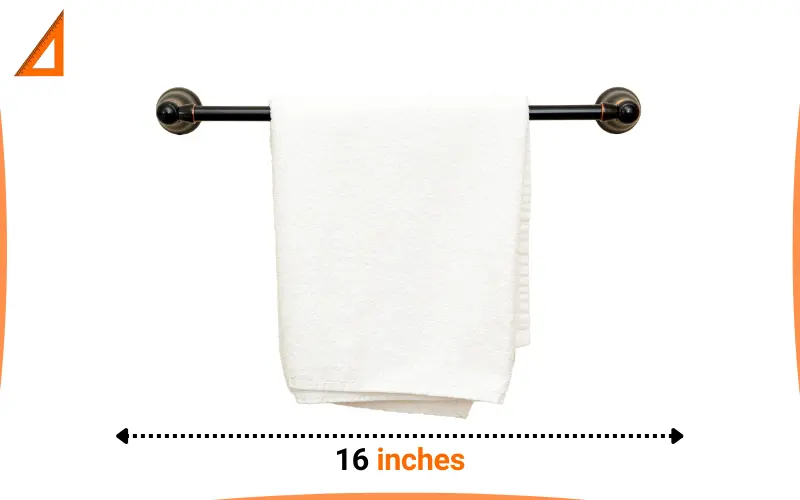
Many bathroom hand-towel bars measure approximately 16 inches wide. This length provides enough space to hang a folded towel neatly while fitting comfortably on smaller bathroom walls.
Manufacturers often select this measurement because it balances usability with space efficiency. A much shorter towel bar can feel cramped, while larger versions may not fit comfortably between mirrors, cabinets, or other fixtures.
Compared with smaller 12-inch towel holders, a 16-inch bar offers noticeably more hanging room without occupying much additional wall space. It’s another practical example of how manufacturers use this measurement in everyday household products.
Size: Around 16 inches wide
10. A Compact Guitar Practice Amplifier
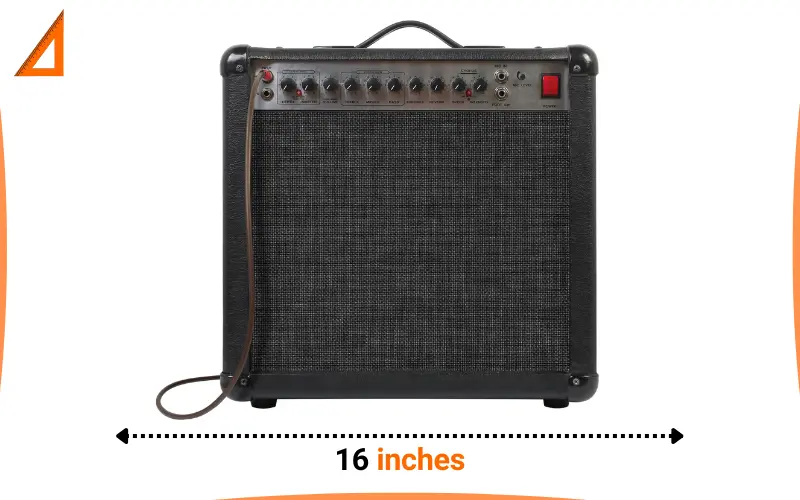
Many portable guitar amplifiers designed for home practice stand approximately 16 inches tall. This height provides enough room for the speaker, amplifier electronics, and control knobs while keeping the unit easy to transport.
Manufacturers build practice amps around this size because musicians often need equipment that’s powerful enough for rehearsals but small enough to fit inside bedrooms, apartments, or home studios. The cabinet size also improves sound quality compared with very small amplifiers.
Compared with compact desktop speakers around 10 or 12 inches, a 16-inch practice amplifier produces fuller sound with stronger bass while remaining lightweight enough to carry to lessons or rehearsals.
Size: Around 16 inches tall
16 Inches Compared to Human
Thinking about 16 inches compared to the human body is one of the easiest ways to estimate this measurement without using a ruler.
For many adults, 16 inches is close to the distance from the elbow to just beyond the fingertips when the arm is fully extended. While arm lengths naturally vary, this provides a useful everyday reference that’s easy to remember.
Another simple method is to use your hands. An average adult hand span measures around 7–8 inches, so placing two hand spans side by side gives you a close estimate of 16 inches.
You can also picture this measurement across part of your upper body. Sixteen inches is longer than the width of many shoulders viewed from the front, making it a substantial but still manageable length. These human-scale comparisons are especially useful when shopping, arranging furniture, or estimating product dimensions without a tape measure.
16 Inches Compared With Everyday Sizes
| Measurement | Everyday Example | Compared With 16 Inches |
|---|---|---|
| 10 inches | Cast-Iron Skillet | 6 Inches Shorter |
| 12 inches | Standard School Ruler | 4 Inches Shorter |
| 14 inches | 14-inch Laptop | 2 Inches Shorter |
| 15 inches | Portable Bluetooth Speaker | 1 Inch Shorter |
| 16 inches | Concrete Masonry Block | Reference Point |
| 18 inches | Half Yardstick | 2 Inches Longer |
| 24 inches | Two Feet | 8 Inches Longer |
Where You’ll Notice 16 Inches the Most
Sixteen inches occupies a useful middle ground — noticeably longer than a standard school ruler, yet still short enough to carry comfortably with one hand. That balance is exactly why this measurement shows up across so many unrelated industries, from construction to your kitchen table.
Construction materials are one of the biggest examples. Concrete blocks, masonry tools, and levels frequently use 16-inch dimensions because standardized sizes simplify building projects and reduce guesswork on the job site.
You’ll also notice this measurement throughout the home. Storage bins, towel bars, rolling pins, and whiteboards commonly measure close to 16 inches because they offer generous working space while remaining easy to carry and store.
Food and recreation provide even more familiar examples — a large pizza, a child’s first bicycle, and portable practice amplifiers all commonly land close to the 16-inch mark, making it one of the most versatile measurements found in everyday life. Once you start noticing it, 16 inches turns up in kitchens, garages, driveways, and living rooms far more often than you’d expect.
Estimating 16 Inches Without a Ruler
If you don’t have a ruler nearby, there are several easy ways to estimate 16 inches.
The simplest method is to imagine a 12-inch school ruler and then add another 4 inches beyond the end. Since most people have used a ruler in school, this creates a quick mental picture.
Another useful trick is to use your hands. The average adult hand span measures roughly 7–8 inches, so two hand spans placed side by side equal approximately 16 inches.
You can also picture a large pizza, a standard concrete masonry block, or a children’s bicycle wheel — all of which follow consistent, standardized sizing close to 16 inches.
These methods aren’t intended to replace precise measuring tools, but they’re accurate enough for estimating dimensions while shopping, cooking, or planning DIY projects.
Here we have more guides on measurement
FAQs
How long is 16 inches in centimeters?
16 inches equals exactly 40.64 centimeters (406.4 millimeters). It is also equal to 1.333 feet or 0.4064 meters.
How big is 16 inches?
A simple way to picture 16 inches is to imagine a large pizza, a standard concrete block, or a wooden rolling pin. These everyday objects provide an easy visual reference for the measurement.
What are some things that are 16 inches long?
Common examples include a large pizza, a concrete masonry block, a children’s bicycle wheel, a rolling pin, a storage bin, a mason’s level, and a portable whiteboard. These objects make it much easier to understand what 16 inches looks like.
How does 16 inches compare to a person?
For many adults, 16 inches is close to the distance from the elbow to just beyond the fingertips. It’s also approximately equal to two average adult hand spans placed side by side.
How can I estimate 16 inches without a ruler?
You can imagine a 12-inch ruler plus another 4 inches, use two adult hand spans, or picture a large pizza or a standard 16-inch concrete block. These simple comparisons work well for everyday estimating.
Conclusion
Understanding how long is 16 inches becomes much easier when you connect the measurement with familiar objects instead of relying only on numbers. Whether you picture a large pizza, a concrete block, a rolling pin, a children’s bike wheel, or a mason’s level, these real-world examples create a clear mental image that’s easy to remember.
The next time you see a product listed as 16 inches, you’ll already have several practical references in mind. That makes shopping online, planning DIY projects, organizing your home, or comparing product dimensions faster and far more accurate — even without reaching for a measuring tape.