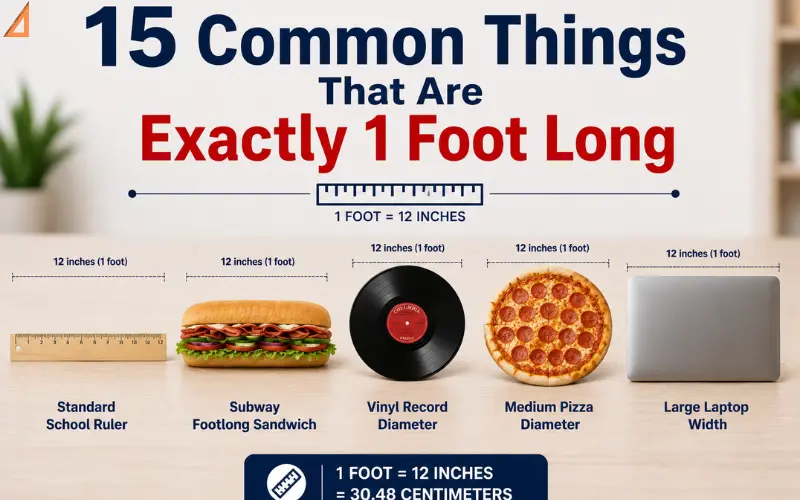

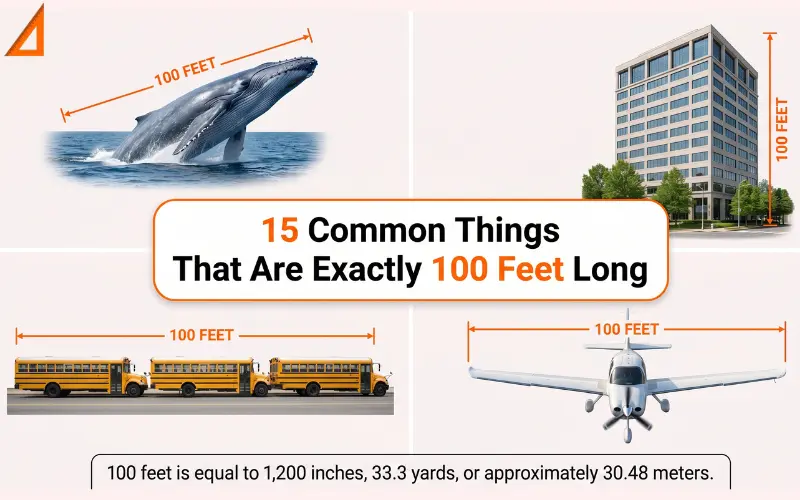
How Long Is 100 Feet? 100 feet is equal to 1,200 inches, 33.3 yards, or approximately 30.48 meters. If you’re wondering how long is 100 feet, how tall is 100 feet, how much is 100 ft, or what is 100 feet long, it’s a much larger distance than most people initially imagine.
Many people hear “100 feet” and think it sounds manageable, but when you actually see it in real life, the scale becomes much more impressive. A distance of 100 feet can span a large building, stretch across part of a parking lot, or reach the height of a 10-story structure. Because most people rarely measure distances this large, visual comparisons are often the easiest way to understand it.
Instead of focusing on numbers, picture a blue whale, ten average cars parked bumper-to-bumper, or a basketball court from baseline to baseline. Familiar objects like these instantly make 100 feet easier to imagine and provide a practical measurement reference for everyday understanding.
100 Feet Conversion Table
| Measurement | Equivalent |
|---|---|
| 100 Feet | 1,200 Inches |
| 100 Feet | 30.48 Meters |
| 100 Feet | 3,048 Centimeters |
| 100 Feet | 30,480 Millimeters |
| 100 Feet | 33.33 Yards |
| 100 Feet | 0.0189 Miles |
How Big Is 100 Feet In Real Life?
A distance of 100 feet is roughly the length of a professional basketball court. It is also close to the height of a 10-story building, depending on floor spacing.
Walking 100 feet usually takes around 12 to 15 average adult steps. Indoors, this distance feels enormous because it can stretch across multiple rooms. Outdoors, however, it often appears shorter because open spaces make large measurements seem smaller than they really are.
This is why real-life comparisons are helpful. Most people can picture a school bus, a basketball court, or several parked cars much more easily than they can picture 1,200 inches.
Why Understanding 100 Feet Matters
Knowing what 100 feet looks like can help when:
- Estimating property dimensions
- Planning landscaping projects
- Measuring sports fields
- Understanding building heights
- Comparing vehicle sizes
- Planning construction projects
- Estimating outdoor distances
Because 100 feet is a common benchmark measurement, it’s useful in both residential and commercial situations.
How To Estimate 100 Feet Without A Tape Measure
One quick way is by walking. Most adults cover roughly 100 feet in about 40 normal walking steps.
You can also imagine ten average cars parked in a straight line, the length of a basketball court, or the height of a ten-story building. These references provide an easy visual guide whenever measuring tools aren’t available.
15 Common Things That Are About 100 Feet Long
| Common Object | Approximate Size |
|---|---|
| Professional Basketball Court | 94 Feet |
| Ten Average Cars Parked End-To-End | About 100 Feet |
| Blue Whale | 80–100 Feet |
| 10-Story Building Height | About 100 Feet |
| Three School Buses | Approximately 105 Feet |
| Large Commercial Greenhouse | About 100 Feet |
| Regional Aircraft Wingspan | 90–100 Feet |
| Large Hotel Swimming Pool | About 100 Feet |
| Twenty Shopping Carts End-To-End | About 100 Feet |
| Large Warehouse Aisle | Approximately 100 Feet |
| Mature Redwood Tree Height | Around 100 Feet |
| Ferry Boat Deck Section | About 100 Feet |
| Long Apartment Building Frontage | Approximately 100 Feet |
| Four Tennis Courts Side By Side | About 108 Feet |
| Construction Crane Boom | 90–100 Feet |
1. A Professional Basketball Court
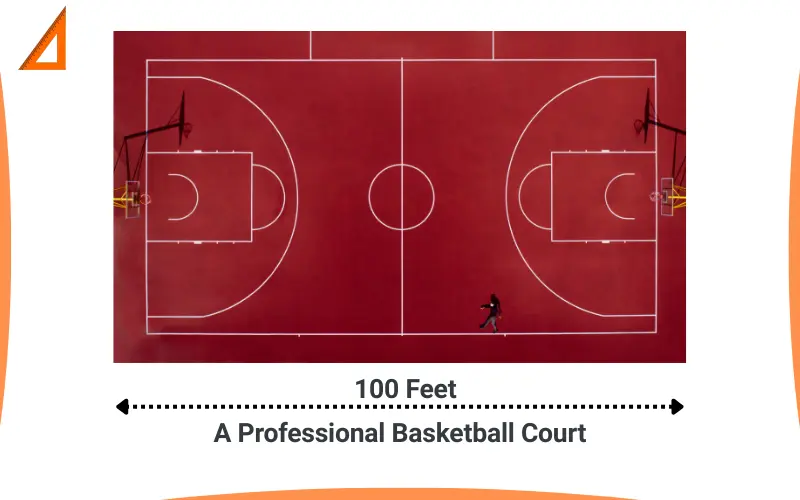
A regulation professional basketball court measures approximately 94 feet long, making it one of the closest and most recognizable examples of 100 feet. If you’ve ever watched a basketball game in person or on television, you’ve already seen a distance that’s nearly identical to 100 feet.
The useful thing about this comparison is that people don’t just see the court—they experience movement across it. Watching players sprint from one end to the other helps create a stronger sense of scale than numbers alone. Adding just a few extra feet beyond the baseline brings the total very close to 100 feet.
Because basketball courts appear in schools, gyms, community centers, and sports arenas worldwide, this is one of the easiest visual references for understanding how long 100 feet really is.
2. Ten Average Cars Parked End-To-End
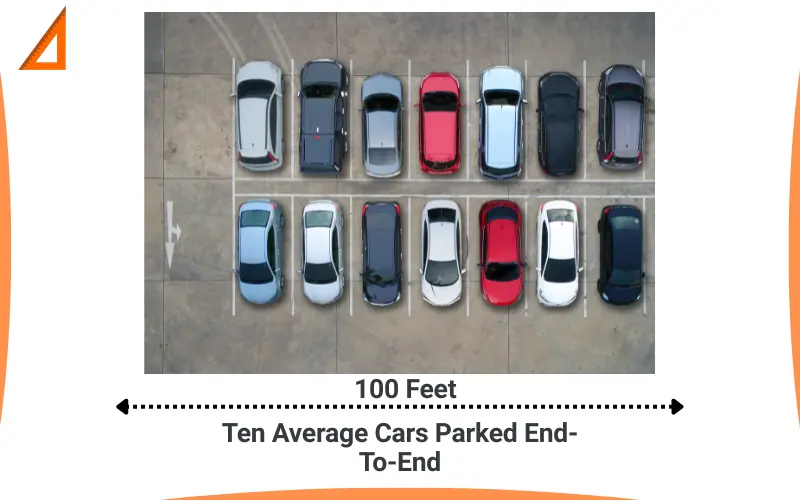
Most passenger cars measure around 14 to 16 feet long. When about seven to ten vehicles are parked bumper-to-bumper, the total distance reaches roughly 100 feet.
This comparison works particularly well because cars are objects people see every day. Imagine a row of vehicles lined up along a curb or inside a dealership parking lot. The length suddenly feels much larger than most people initially expect.
Many people estimate distances using a single car length. Multiplying that visual memory several times provides a surprisingly accurate picture of 100 feet without needing any measuring equipment.
3. A Blue Whale
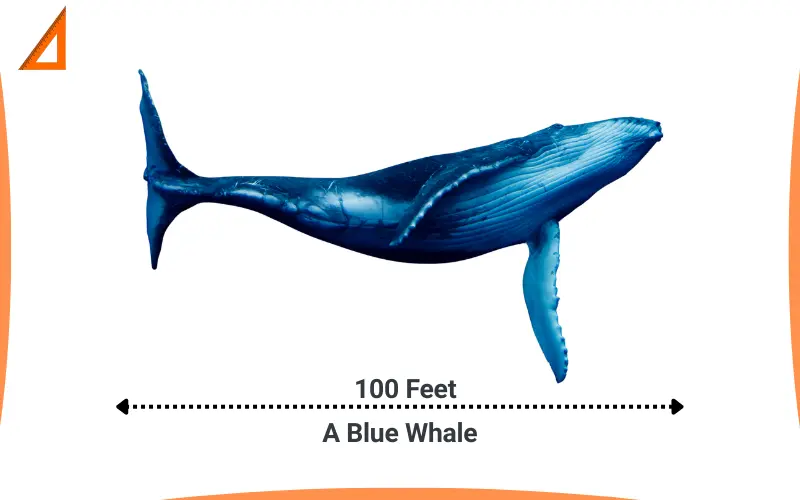
The largest blue whales can grow close to 100 feet long, making them one of the longest animals ever known to exist on Earth.
Most people have seen blue whale models in museums, documentaries, aquariums, or educational programs. Seeing a creature that approaches the length of a basketball court creates an unforgettable impression of size.
Unlike vehicles or buildings, a blue whale introduces a natural comparison. It helps people understand that 100 feet isn’t just a construction measurement—it’s also a scale found in the natural world.
4. A 10-Story Building
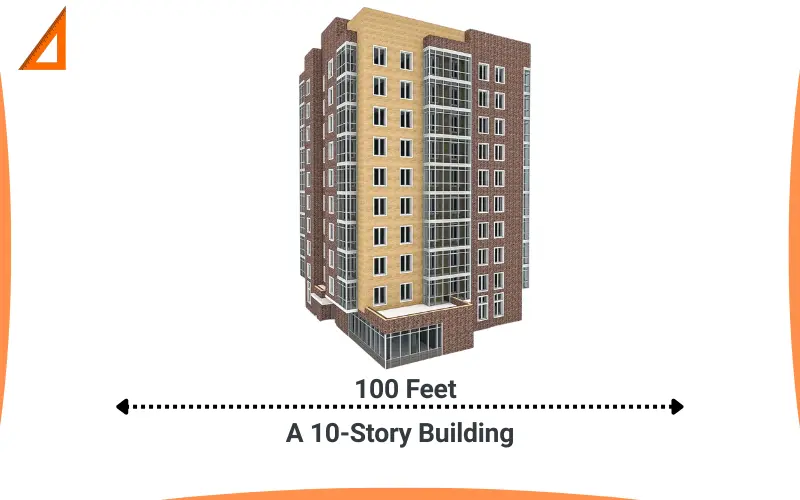
When people ask how tall is 100 feet, one of the best answers is a typical 10-story building. Depending on ceiling height and construction style, many buildings of this size stand close to the 100-foot mark.
Looking upward at a building creates a completely different perspective than measuring horizontal distance. What feels manageable on the ground suddenly seems enormous when viewed vertically.
Most city residents see buildings of this height regularly, making it one of the most relatable ways to understand the scale of 100 feet.
5. Three School Buses
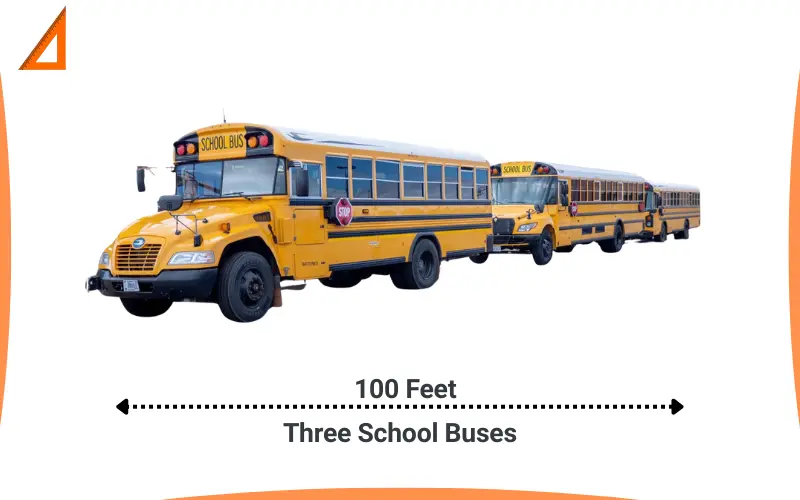
A standard school bus is usually around 35 feet long. Place three buses in a straight line and the combined length comes very close to 100 feet.
This comparison works because school buses are larger than many people realize. Seeing one parked nearby already creates a strong visual impression. Multiplying that length by three quickly demonstrates how substantial 100 feet actually is.
Whether you’ve ridden a bus, waited near one, or seen rows of them parked together, this example provides an easy measurement reference.
6. A Large Commercial Greenhouse
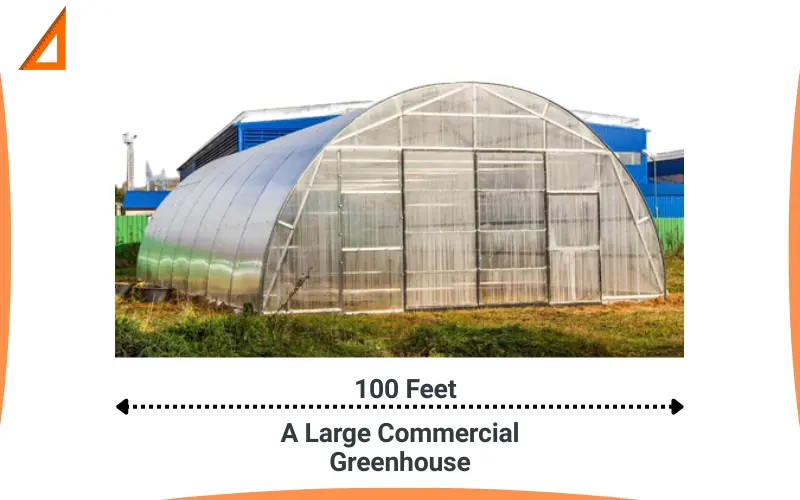
Many commercial greenhouses are built in sections measuring approximately 100 feet long.
Walking alongside one reveals how far the structure stretches. Unlike buildings that rise vertically, greenhouses emphasize horizontal distance and make the measurement easier to judge visually.
Gardeners and homeowners who visit nurseries often encounter structures close to this size without realizing how long they actually are.
7. A Small Airplane Wingtip Span
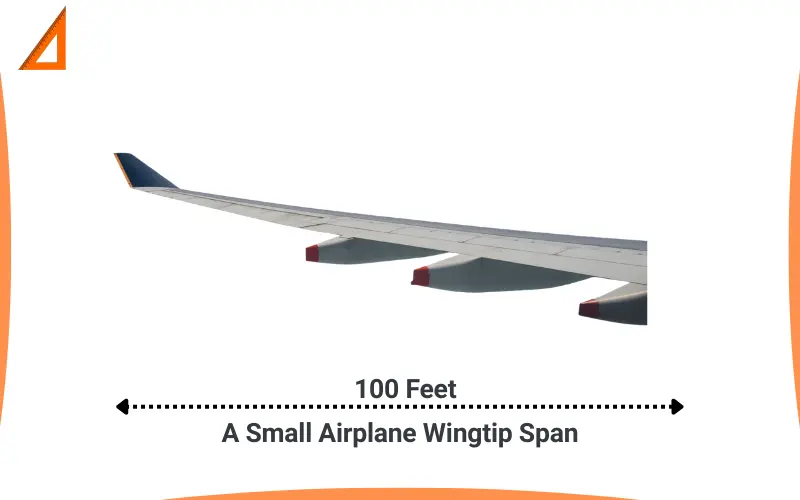
Some small regional aircraft have wingspans approaching 100 feet.
Standing near an aircraft provides a completely different sense of scale because the distance extends from wingtip to wingtip rather than along the ground. Most people only notice airplane length, but wingspan can be equally impressive.
This comparison is particularly memorable for anyone who has visited an airport or aviation museum.
8. A Large Hotel Swimming Pool
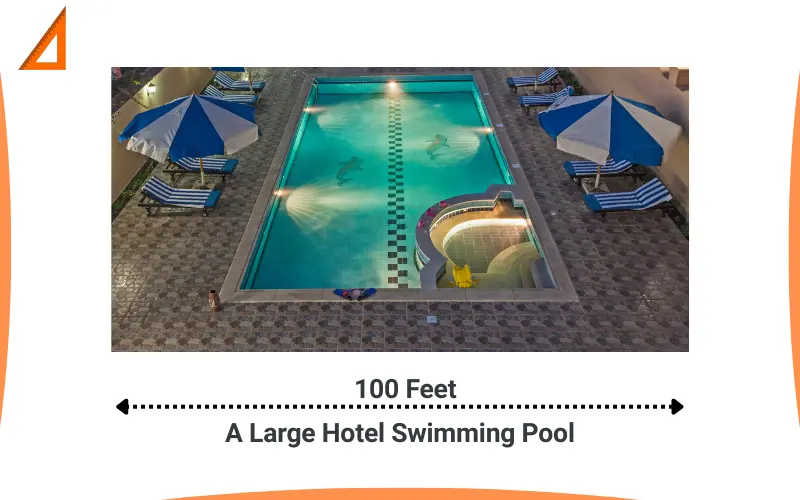
Many hotel pools designed for recreation and lap swimming measure close to 100 feet in length.
Swimming or walking around a pool allows people to physically experience the distance rather than simply observe it. That’s one reason pool dimensions are often easier to remember than abstract measurements.
The long rectangular shape also helps create a clear visual guide for estimating large distances.
9. A Row Of Twenty Shopping Carts
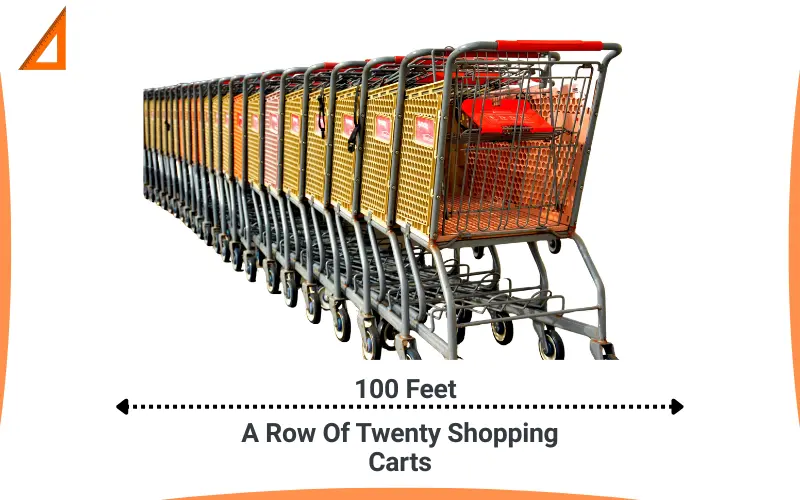
A typical shopping cart measures around 5 feet long. Lining up twenty carts end-to-end creates a distance close to 100 feet.
Most people push shopping carts every week, making this a surprisingly useful comparison. Seeing a long row of carts outside a supermarket immediately communicates scale.
The familiarity of the object makes this example easy to remember and apply later when estimating distance.
10. A Large Warehouse Aisle
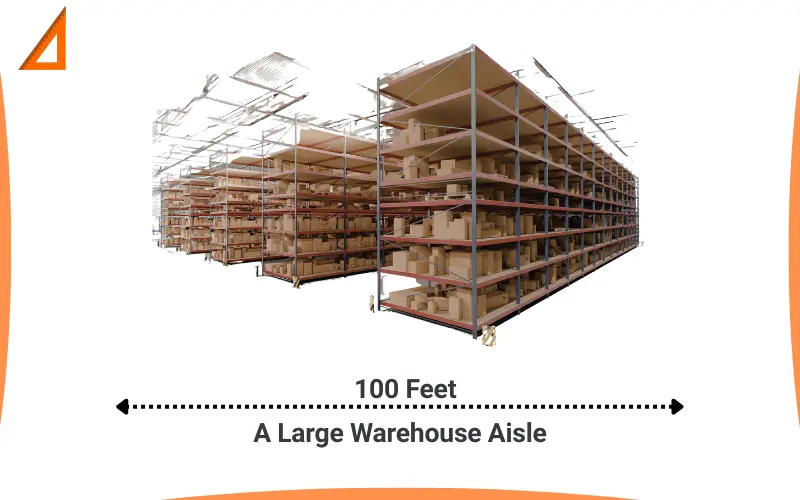
Many warehouse aisles extend approximately 100 feet before reaching another section of storage.
Walking down one of these aisles gives a strong sense of how long the measurement feels in real life. The shelving on both sides helps frame the distance and makes it easier to judge visually.
Anyone who has visited a warehouse store, distribution center, or large retail outlet has likely encountered a space close to this length.
11. A Mature Redwood Tree
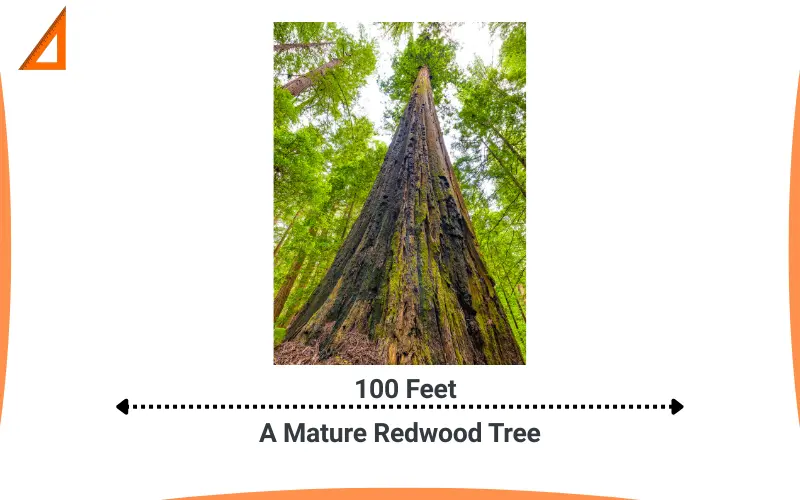
Some redwood trees grow far beyond 100 feet, but many mature specimens reach approximately this height during certain growth stages.
Looking up at a towering tree creates one of the most dramatic visualizations of 100 feet available. Nature often makes large measurements feel even more impressive than buildings do.
The comparison is memorable because it combines height, scale, and a familiar natural landmark.
12. A Ferry Boat Deck Section
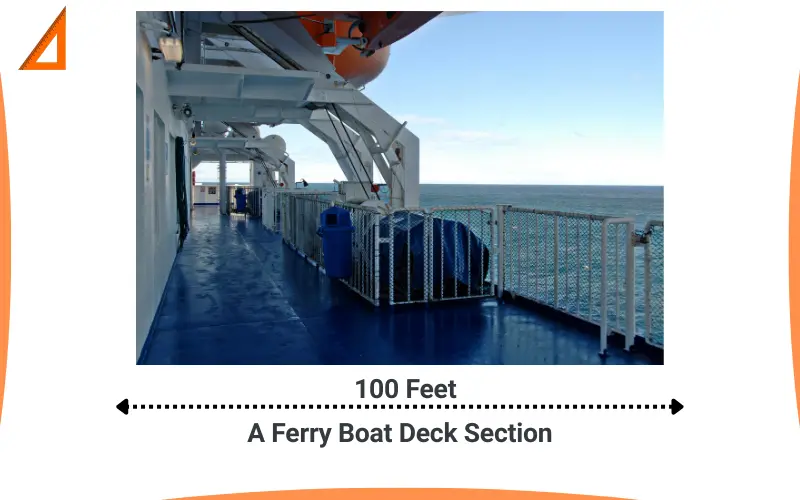
Many ferry boats contain passenger deck sections stretching roughly 100 feet long.
Walking along a ferry deck offers a practical sense of distance while maintaining a clear visual reference from one end to the other.
People who have traveled by ferry often remember how surprisingly large the deck feels compared to everyday spaces.
13. A Long Apartment Building Frontage
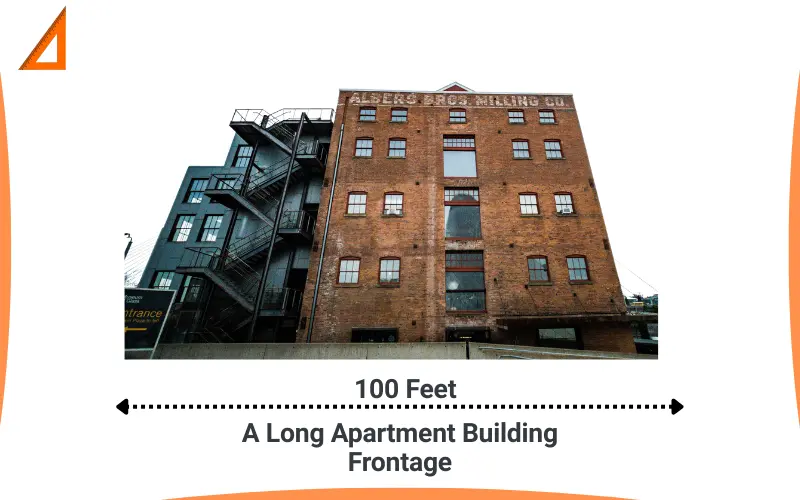
Many apartment buildings stretch approximately 100 feet across their front-facing side.
Unlike a skyscraper, this comparison focuses on horizontal distance. Looking from one corner of the building to the other helps illustrate how far 100 feet extends along the ground.
Because apartment complexes exist in nearly every city, this is another highly recognizable size example.
14. Four Standard Tennis Courts Side By Side
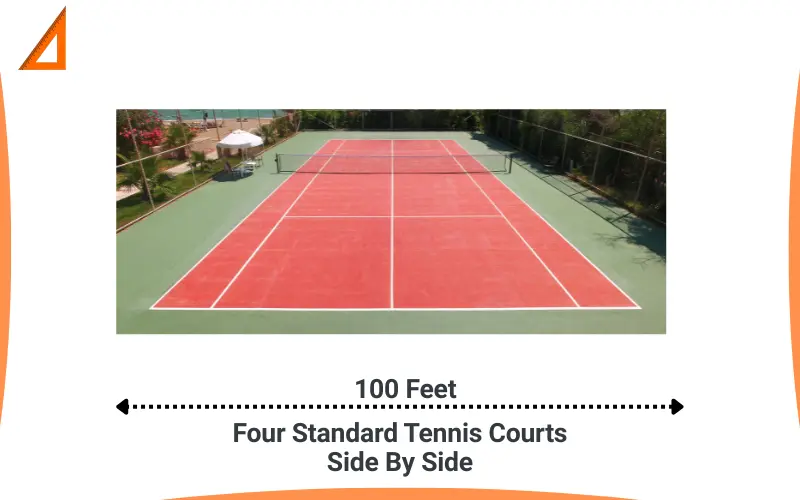
A standard tennis court is approximately 27 feet wide. Four courts placed side by side create a width slightly greater than 100 feet.
Sports facilities provide excellent measurement references because they are built using standardized dimensions. This makes them reliable for estimating distance.
For tennis players and spectators, this comparison offers an immediate visual understanding of the scale.
15. A Large Construction Crane Boom
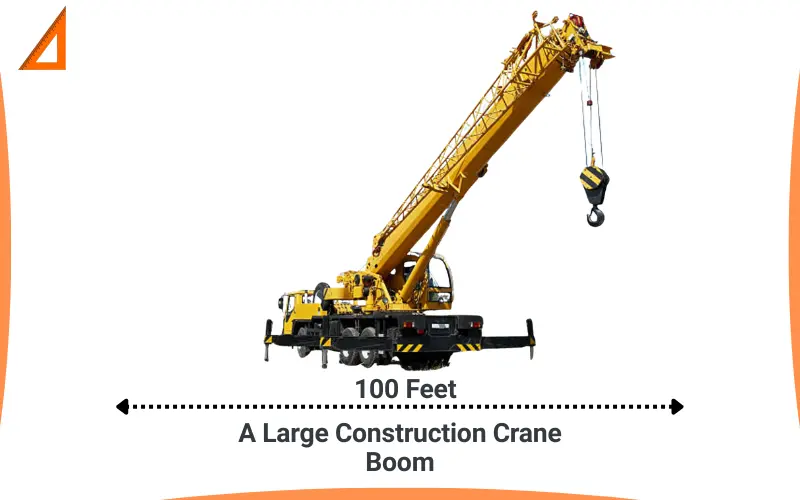
Many construction cranes use boom sections that approach or exceed 100 feet in length.
These structures dominate skylines and instantly communicate large-scale measurements. Watching a crane extend across a construction site makes it easier to appreciate just how long 100 feet really is.
Because cranes are common in growing cities, they provide a useful modern-day measurement reference.
What Is 100 Feet Long Compared To Everyday Objects?
One hundred feet is longer than most homes, longer than most swimming pools, and far longer than typical household furniture. It sits in a size category where buildings, sports facilities, large vehicles, and commercial structures become useful comparison points.
That’s why people often search for what is 100 feet long instead of relying on conversion numbers. Familiar objects create a much clearer mental picture than inches or meters alone.
FAQs
How long is 100 feet in meters?
100 feet equals approximately 30.48 meters.
How tall is 100 feet?
A typical 10-story building is close to 100 feet tall.
What is 100 feet long?
A basketball court, blue whale, three school buses, large greenhouse, or warehouse aisle can all be close to 100 feet long.
How many steps is 100 feet?
Most adults cover approximately 100 feet in around 40 walking steps.
Is 100 feet a long distance?
Yes. For everyday spaces, homes, and vehicles, 100 feet is a substantial distance that is much larger than most people initially imagine.
Conclusion
How long is 100 feet becomes much easier when you connect the measurement to real-world examples. A basketball court, blue whale, school buses, warehouse aisle, apartment building, or swimming pool all provide practical visual references that help explain the size.
Whether you’re asking how tall is 100 feet, how much is 100 ft, or what is 100 feet long, these familiar comparisons make the measurement easier to estimate, understand, and remember in everyday situations.