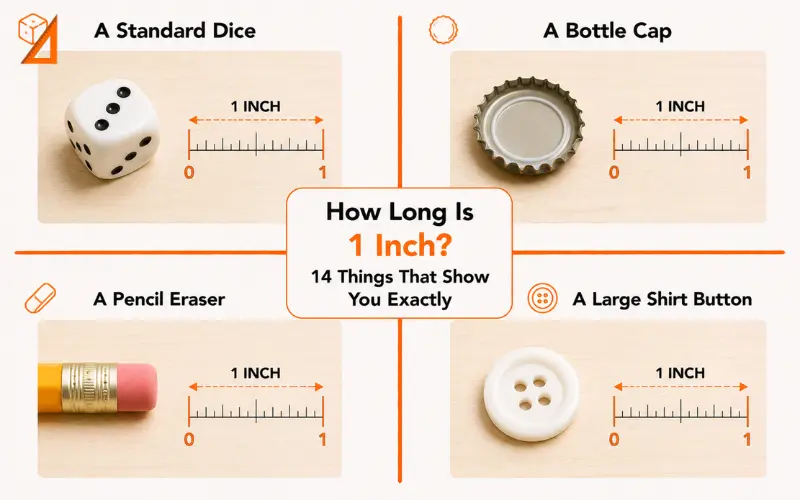

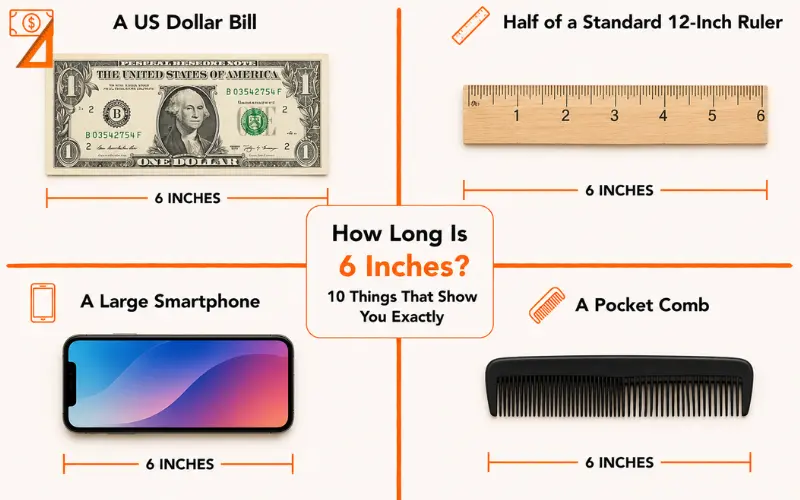
Six inches equals 15.24 centimeters, but if you’ve ever wondered how long is 6 inches, that number is much easier to understand when you compare it with things you already know. A US dollar bill, half of a standard ruler, and a butter knife are all close to this length, making them simple everyday references.
You’ll come across 6 inches in kitchen tools, office supplies, electronics, and many household products. This guide shows 10 everyday objects that help you picture the measurement quickly, whether you’re shopping online or estimating size without a ruler.
Quick Conversions
| Unit | 6 Inches Equals |
|---|---|
| Centimeters | 15.24 cm |
| Millimeters | 152.4 mm |
| Feet | 0.5 ft |
| Meters | 0.1524 m |
One conversion is worth remembering more than the others:
6 inches = 15.24 centimeters.
You’ll often see this measurement when shopping for electronics, kitchen utensils, stationery, and home décor, especially if product sizes are listed in the metric system.
What Does 6 Inches Look Like?
Six inches is long enough to feel comfortable in one hand while still being compact enough to fit inside a drawer, backpack, or kitchen utensil holder. It’s a size that’s widely used because it provides a good balance between portability and practicality.
Compared with smaller measurements like 4 or 5 inches, the extra length is immediately noticeable. That’s why many household products, office supplies, and handheld tools are designed around this size, making 6 inches one of the easiest measurements to recognize once you’ve seen a few real-life examples.
10 Common Things That Are About 6 Inches
| Object | About Size |
|---|---|
| US Dollar Bill | 6.14 inches long |
| Half of a Standard 12-Inch Ruler | Exactly 6 inches |
| Standard Butter Knife | About 6 inches long |
| Large Smartphone | Around 6 inches tall |
| Pocket Comb | About 6 inches long |
| Small TV Remote | Around 6 inches long |
| 6-Inch Chef’s Knife Blade | Exactly 6 inches (blade only) |
| Dinner Plate Radius | About 6 inches |
| Half of a Standard Wooden Pencil | Around 6 inches |
| Two Credit Cards End to End | About 6.7 inches (very close to 6 inches) |
1. A US Dollar Bill
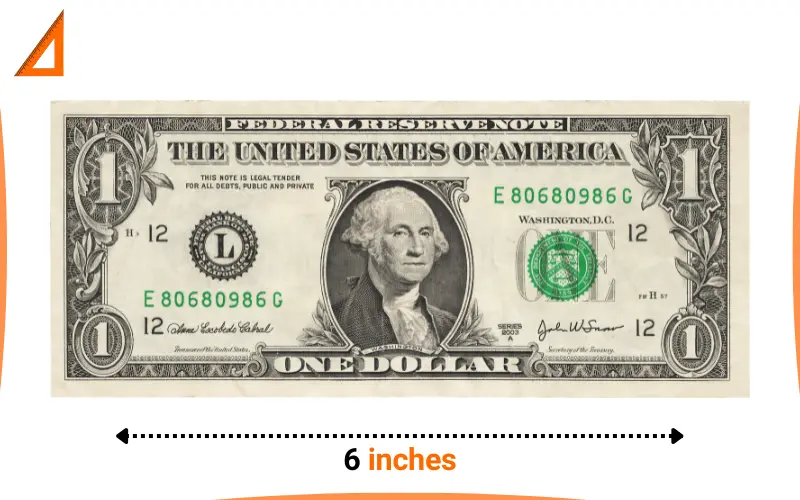
If you’re looking for a quick answer to how long is 6 inches compared to an object, a US dollar bill is one of the best examples.
A dollar bill measures 6.14 inches from one end to the other, making it only a fraction longer than our target. That’s close enough that most people would never notice the difference without using a ruler.
Since almost everyone has handled paper money at some point, this comparison is easy to remember. The next time you pull a dollar bill from your wallet, you’re holding one of the closest real-life references to 6 inches.
Size: 6.14 inches
2. Half of a Standard 12-Inch Ruler
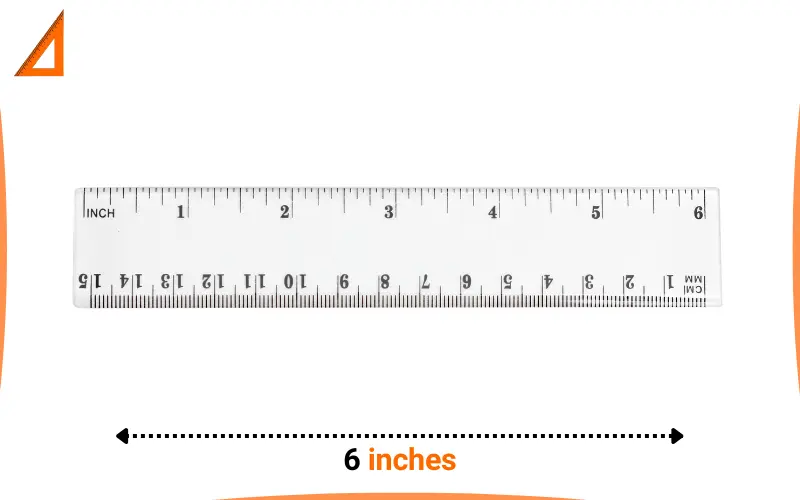
A standard classroom ruler measures 12 inches, so the halfway point gives you an exact 6-inch reference. Unlike many household objects that vary slightly from one manufacturer to another, a ruler is made for accurate measurement, making it one of the few comparisons that’s precise rather than approximate.
If you already have a ruler nearby, simply looking at its midpoint is an easy way to picture 6 inches without estimating.
Size: Exactly 6 inches
3. A Standard Butter Knife
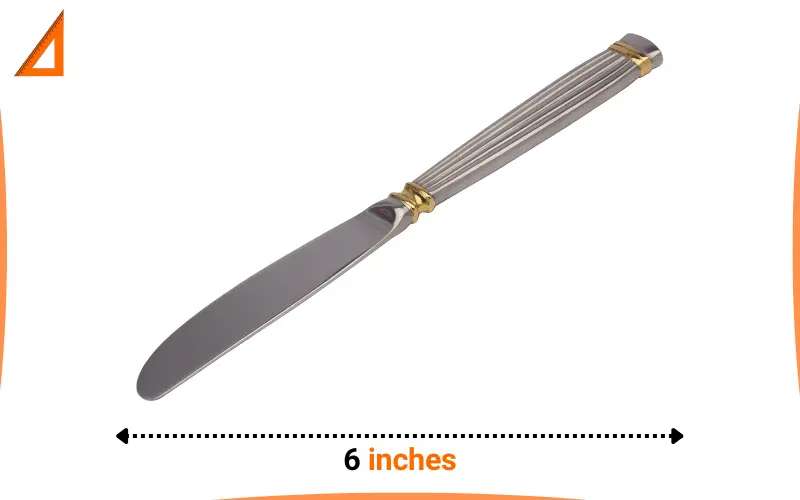
Most standard butter knives measure between 6 and 7 inches, with many falling very close to the 6-inch mark. Their rounded blade and shorter design make them ideal for spreading butter, jam, or soft cheese instead of cutting food.
Because butter knives are found in almost every kitchen, they’re one of the easiest everyday references for understanding what 6 inches looks like.
Size: Around 6 inches
4. A Large Smartphone
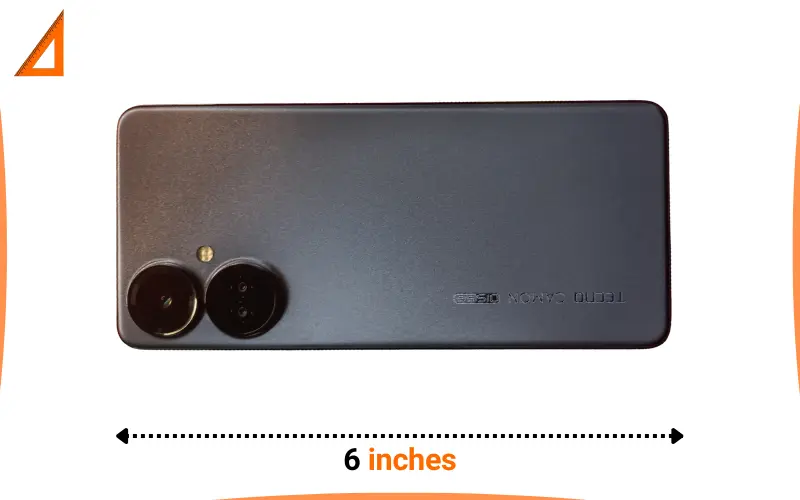
Modern smartphones have become much larger than they were a few years ago.
Many popular models measure around 6 inches in height before you even add a protective case.
If you own a larger iPhone, Samsung Galaxy, or Google Pixel, you’ve probably been carrying a six-inch reference in your pocket all along.
Compared with a folded wallet from our 5-inch guide, the extra inch makes the phone noticeably taller, even though the difference sounds small on paper.
Size: About 6 inches
5. A Pocket Comb
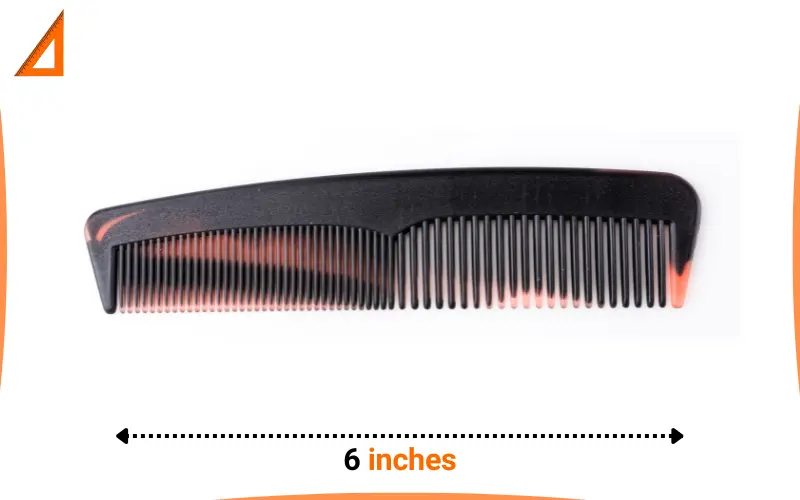
Small pocket combs are designed to fit neatly into a jacket pocket, travel bag, or grooming kit.
Most measure between 5.5 and 6 inches, giving enough length for comfortable styling without taking up much space.
It’s one of those everyday items that people use without ever thinking about its dimensions.
Once you know its size, it becomes another reliable way to picture 6 inches without reaching for a ruler.
Size: Around 6 inches
6. A Small TV Remote
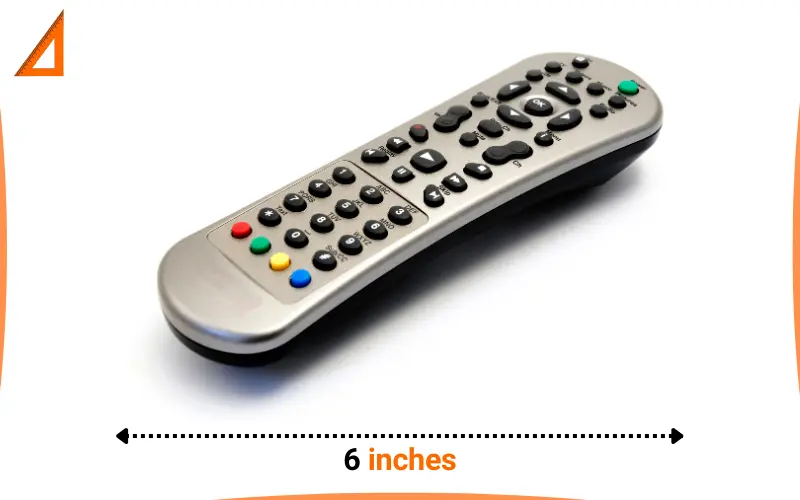
Compact TV remotes supplied with streaming devices, soundbars, and smaller televisions are often around 6 inches long. Their size allows manufacturers to include the essential buttons while keeping the remote comfortable to hold in one hand.
Since many people use these remotes every day, they provide another practical reference for visualizing 6 inches without needing a ruler.
Size: Around 6 inches
7. A 6-Inch Chef’s Knife Blade
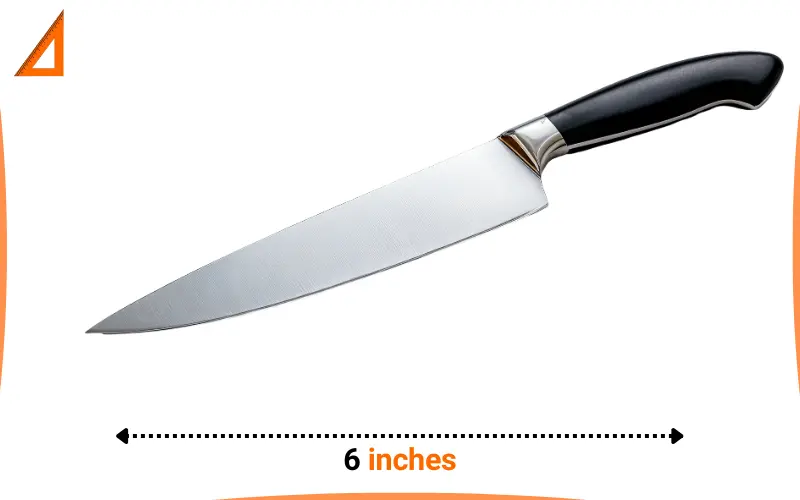
Unlike a butter knife, this comparison is built right into the product’s name.
Many kitchen knives are sold according to blade length, and one of the most popular options is a 6-inch chef’s knife. That’s six inches from the tip of the blade to where it meets the handle—not including the handle itself.
Professional chefs often choose this size because it’s easier to control than an 8-inch knife while still being large enough for chopping vegetables, herbs, and meat.
If you’ve ever cooked dinner with one, you’ve already used an exact 6-inch reference.
Size: Exactly 6-inch blade
Related Post: How long is 8 inches
8. A Small Dinner Plate Radius
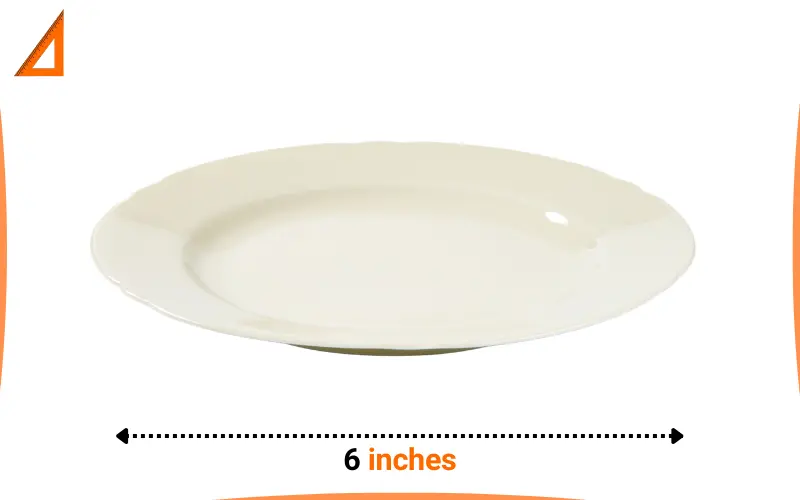
Many dinner plates measure 10 to 12 inches across, depending on the style and manufacturer. On a 12-inch plate, the distance from the center to the rim—its radius—is 6 inches, making it a useful way to picture this measurement.
The next time you’re setting the table, imagine drawing a straight line from the middle of the plate to the outer edge. That simple visual gives you a reliable idea of what 6 inches looks like.
Size: About 6 inches (center to edge on a 12-inch plate)
9. Half of a Standard Wooden Pencil
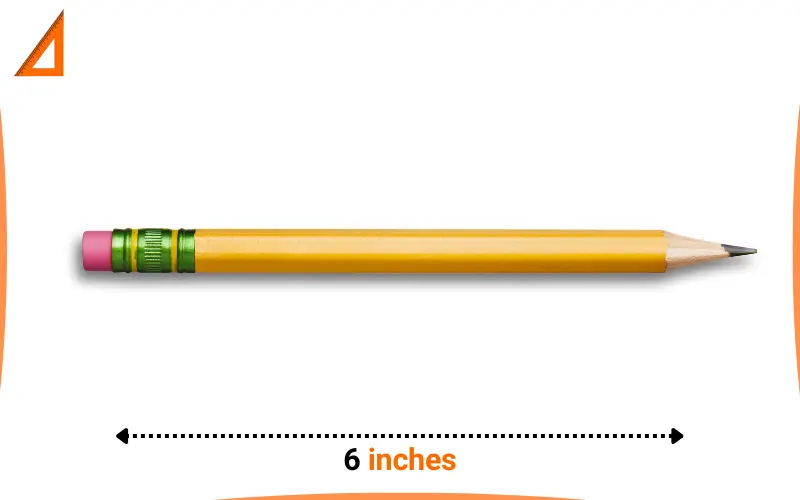
A brand-new wooden pencil usually measures about 7½ inches long.
After weeks of sharpening, many pencils end up around 6 inches before they’re finally replaced.
It’s something students, artists, and office workers see all the time without paying attention to the actual measurement.
Compared with a brand-new pencil, the shorter version still feels comfortable to write with, which is why many people continue using it until it becomes much smaller.
Size: Around 6 inches
10. Two Credit Cards Placed End to End
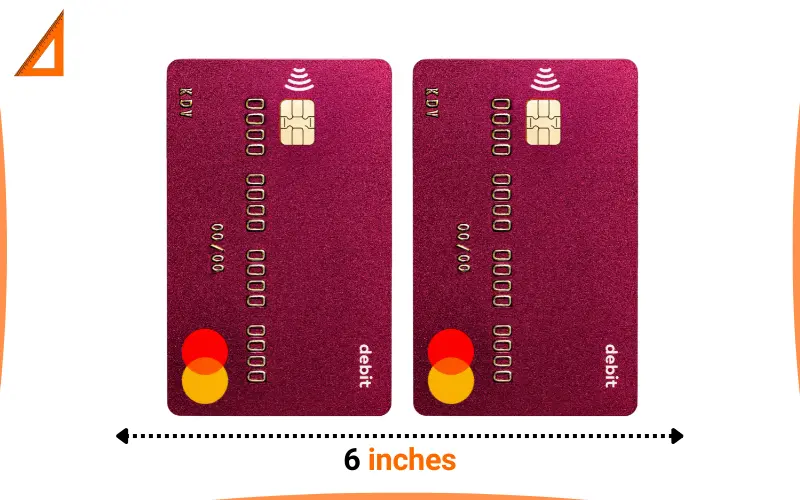
A standard credit card measures 3.37 inches along its longer edge.
Place two cards together end to end and you’ll have about 6.7 inches, which is only slightly longer than our target.
Cover the extra little bit with your thumb, and what’s left gives you a surprisingly accurate picture of 6 inches.
This isn’t a single object, but it’s a practical comparison because almost everyone has at least one or two cards in their wallet.
Size: Around 6.7 inches (very close to 6 inches)
6 Inches Compared With Everyday Sizes
| Measurement | Everyday Example | Compared With 6 Inches |
|---|---|---|
| 3 inches | Adult Index Finger | Half of 6 Inches |
| 5 inches | Folded Men’s Wallet | About 1 Inch Shorter |
| 6 inches | US Dollar Bill / Half a Ruler | Reference Point |
| 8 inches | Chef’s Knife Blade | About 2 Inches Longer |
| 12 inches | Standard Ruler / 1 Foot | Double the Length |
| 24 inches | Two-Foot Level | Four Times Longer |
Where You’ll See 6 Inches in Everyday Life
Once you recognize 6 inches, you’ll begin spotting it in many everyday products.
In electronics, large smartphones and compact TV remotes often fall close to this size. Around the house, you’ll find similar dimensions in pocket combs, small organizers, and kitchen utensils. In the kitchen, chef’s knife blades, pencils, and even the radius of some larger dinner plates provide additional examples of this common measurement.
Because so many everyday products are designed around similar dimensions, estimating 6 inches becomes much easier with practice.
How to Measure 6 Inches Without a Ruler
If you don’t have a ruler nearby, try one of these quick references:
- A large smartphone.
- A pocket comb.
- Half of a standard wooden pencil after it’s been used for a while.
- Two credit cards placed end to end (slightly longer than 6 inches).
These methods won’t replace an exact measurement, but they’re accurate enough for quick everyday estimates.
Here we have more guides on measurement:
- How long is 11 inches
- How long is 10 inches
- How long is 9 inches
- How long is 4 inches
- How long is 3 inches
- How long is 2 inches
- How long is 1 inch
FAQs
How long is 6 inches in centimeters?
Six inches equals 15.24 centimeters (152.4 millimeters). This is the exact metric conversion you’ll commonly see on product specifications and shopping websites.
How big is 6 inches?
A simple way to picture 6 inches is to think of a large smartphone or the blade of a 6-inch chef’s knife. Both provide an easy visual reference without needing a ruler.
What is 6 inches compared to an object?
If you’re wondering how long is 6 inches compared to an object, picture a pocket comb, a small TV remote, or the distance from the center of a dinner plate to its edge. These everyday references make the measurement much easier to visualize.
What are common things that are 6 inches?
Common 6-inch objects include a large smartphone, pocket comb, small TV remote, 6-inch chef’s knife blade, half of a wooden pencil, and the radius of many dinner plates.
Can I measure 6 inches without a ruler?
Yes. You can estimate 6 inches using a large smartphone, half of a standard wooden pencil, or by placing two credit cards end to end for a close approximation. These everyday items provide a quick visual guide when a ruler isn’t available.
Conclusion
Now that you know how long 6 inches is, you’ll find it much easier to picture in everyday situations. Instead of relying only on numbers, think of familiar references like a large smartphone, pocket comb, or chef’s knife blade whenever you need a quick estimate.
The more often you notice these objects around your home, office, or kitchen, the more naturally you’ll recognize 6 inches without reaching for a ruler.