
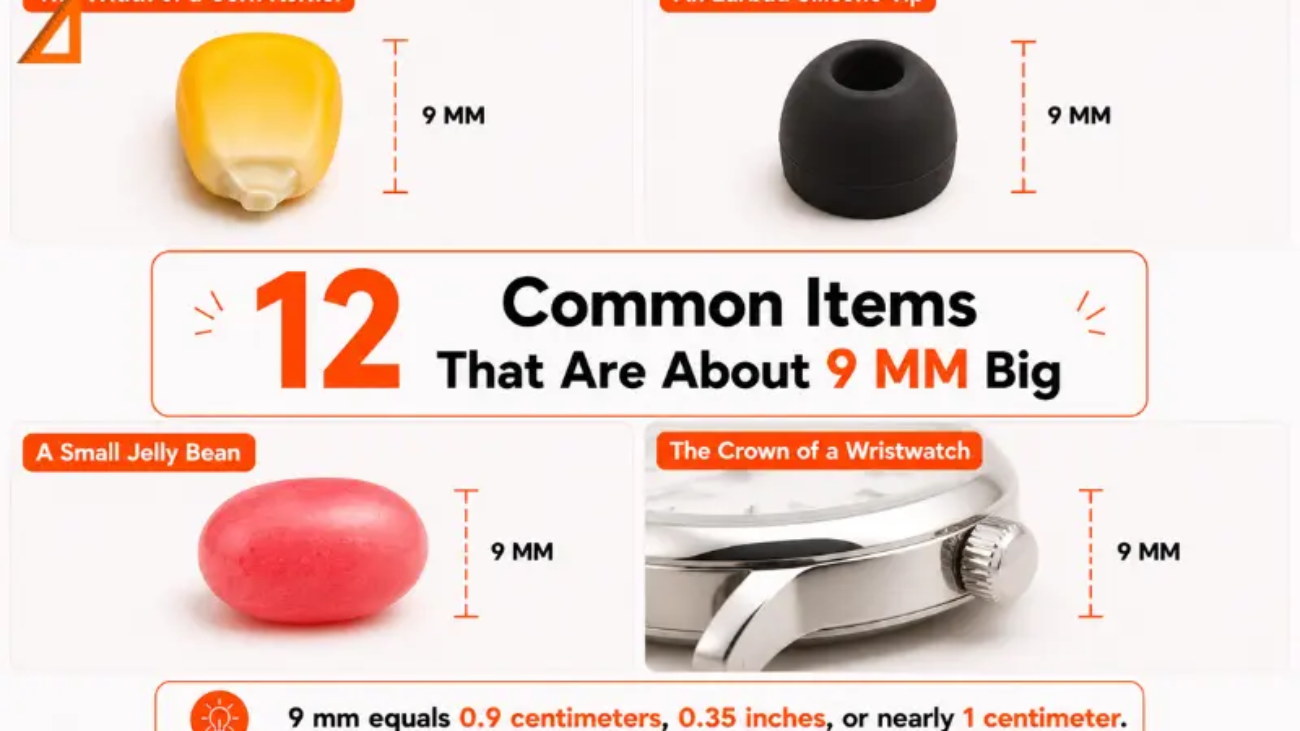
How Big Is 9 MM? 9 mm equals 0.9 centimeters, 0.35 inches, or nearly 1 centimeter. While the number itself looks small, many everyday objects are surprisingly close to this measurement. In fact, 9 mm is one of those sizes that people regularly see but rarely stop to measure.
When reading dimensions online, it can be difficult to understand what 9 mm actually looks like. That’s because most people don’t naturally visualize millimeters. Real-world comparisons make things much easier. Once you connect 9 mm with familiar objects such as a pea, corn kernel, earbud tip, or zipper component, the measurement becomes much easier to picture.
Whether you’re shopping online, checking jewelry sizes, comparing hardware dimensions, choosing craft supplies, or simply trying to estimate length without a ruler, these everyday examples will help you understand exactly how big 9 mm really is.
9 MM Conversion Table
| Measurement | Equivalent |
|---|---|
| 9 Millimeters | 0.9 Centimeters |
| 9 Millimeters | 0.35 Inches |
| 9 Millimeters | 0.03 Feet |
| 9 Millimeters | 0.009 Meters |
| 9 Millimeters | 9000 Micrometers |
| 9 Millimeters | 0.000009 Kilometers |
What Does 9 MM Look Like?
Nine millimeters is slightly smaller than one centimeter. If you draw a line that’s almost 1 cm long, you’re very close to 9 mm.
Although this measurement sounds tiny, it is large enough to be easily visible and comfortably held between your fingertips. It often appears in small accessories, stationery items, clothing hardware, electronics, kitchen ingredients, and craft supplies.
Most people are surprised when they discover how many objects around them measure close to 9 mm. Once you become familiar with this size, you’ll start recognizing it everywhere.
Is 9 MM Big or Small?
The answer depends on what you’re measuring.
For room dimensions, furniture, televisions, or vehicles, 9 mm is extremely small. However, for jewelry, buttons, seeds, beads, hardware, and electronic accessories, 9 mm can actually be quite noticeable.
For example, a 9 mm pearl would stand out clearly on a necklace, while a 9 mm screw head would be easy to grip compared to smaller hardware pieces. This is why context plays such an important role when discussing measurements.
Why 9 MM Matters
Many product specifications use millimeters because they provide precise measurements. You’ll frequently see 9 mm used when discussing:
- Jewelry sizes
- Hardware dimensions
- Craft supplies
- Electronic accessories
- Clothing components
- Kitchen ingredients
- DIY materials
Understanding this measurement helps you make better purchasing decisions and estimate dimensions more accurately.
Ways To Estimate 9 MM Without A Ruler
One of the easiest ways to estimate 9 mm is by looking at a green pea. Most peas fall within the 8–10 mm range, making them surprisingly accurate visual references.
You can also think about the width of a corn kernel, the diameter of an earbud silicone tip, or the size of a watch crown. These familiar objects appear frequently in everyday life and help create a reliable mental picture.
Unlike abstract numbers, recognizable objects give your brain something practical to compare against, making size estimation much easier.
12 Common Things That Are About 9 MM Big
| Common Object | Approximate Size |
|---|---|
| Green Garden Pea | 8–10 MM |
| Corn Kernel Width | 7–9 MM |
| Earbud Silicone Tip | About 9 MM |
| Zipper Pull Hole | 8–10 MM |
| Small Jelly Bean Width | About 9 MM |
| Small Hex Nut Opening | About 9 MM |
| Wristwatch Crown | 8–10 MM |
| Cherry Stem Base Width | About 9 MM |
| Backpack Drawstring End Cap | 8–10 MM |
| Small Craft Pom-Pom | About 9 MM |
| Small Rubber Furniture Pad | About 9 MM |
| Narrow Drinking Straw Diameter | 8–9 MM |
1. A Green Garden Pea
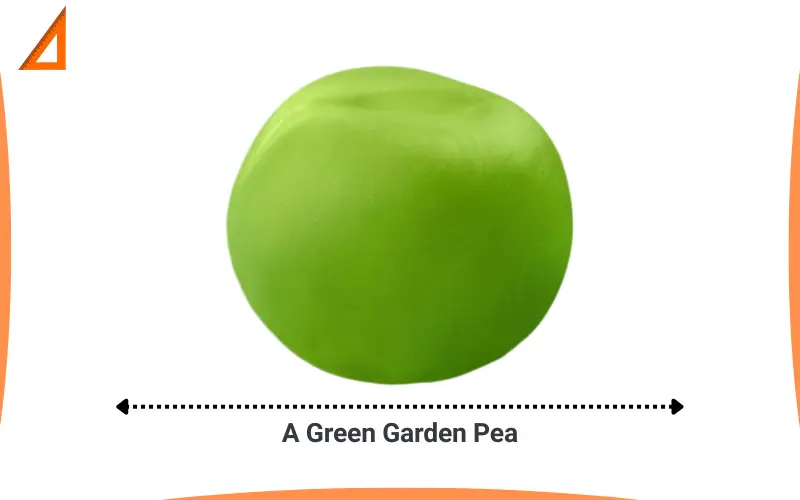
A typical green pea is one of the closest everyday examples of a 9 mm object. Most peas measure somewhere between 8 and 10 mm, making them nearly perfect for visualizing this size.
What makes a pea such a useful comparison is its familiarity. Almost everyone has seen peas on a dinner plate, in a salad, or while cooking. Despite being small, a pea is large enough to pick up individually and easy to notice at a glance. When you imagine holding a single pea between your fingers, you’re already very close to understanding the actual size of 9 mm.
Compared to smaller seeds, a pea feels noticeably larger and rounder. Yet compared to a grape, it remains tiny. This middle-ground size makes it one of the most accurate real-life references available.
2. The Width of a Corn Kernel
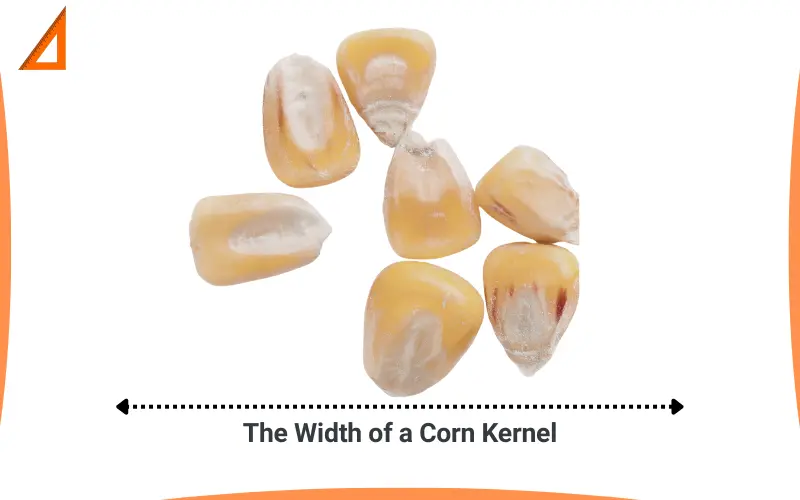
Many corn kernels measure approximately 9 mm across at their widest point. Although people rarely think about measuring corn, it provides an excellent size reference because of how common it is.
When looking at an ear of corn, each kernel appears small on its own, but not microscopic. The kernel is large enough to be picked up individually and clearly visible without any effort. This makes it easier to understand how 9 mm appears in real life.
Because corn is a familiar kitchen ingredient, most people already have a strong visual memory of its size. That familiarity makes it a practical comparison when estimating measurements without a ruler.
3. An Earbud Silicone Tip
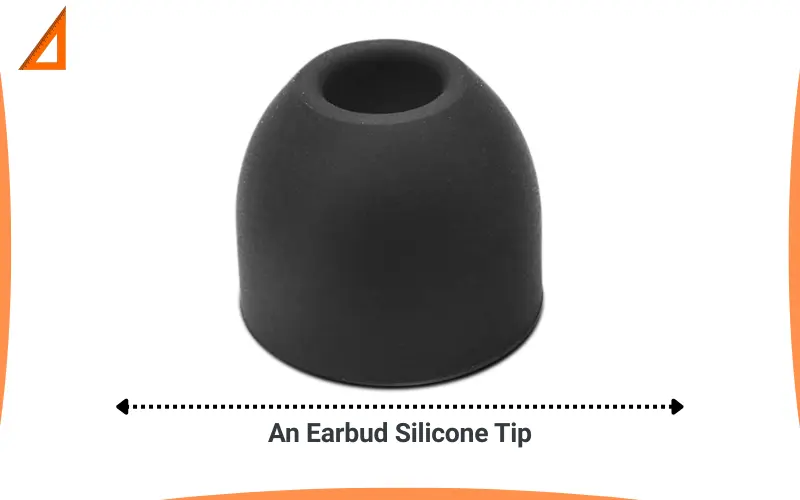
The silicone tip found on many in-ear headphones is often close to 9 mm in diameter. Since millions of people use earbuds daily, this is one of the most relatable examples.
Think about the part that fits comfortably into your ear canal. It needs to be large enough to stay secure yet small enough to remain comfortable. That balance frequently places it near the 9 mm range.
Because earbuds are used during workouts, commuting, studying, and everyday listening, their dimensions become familiar without us realizing it. This makes them a surprisingly effective measurement reference.
4. The Hole in a Zipper Pull
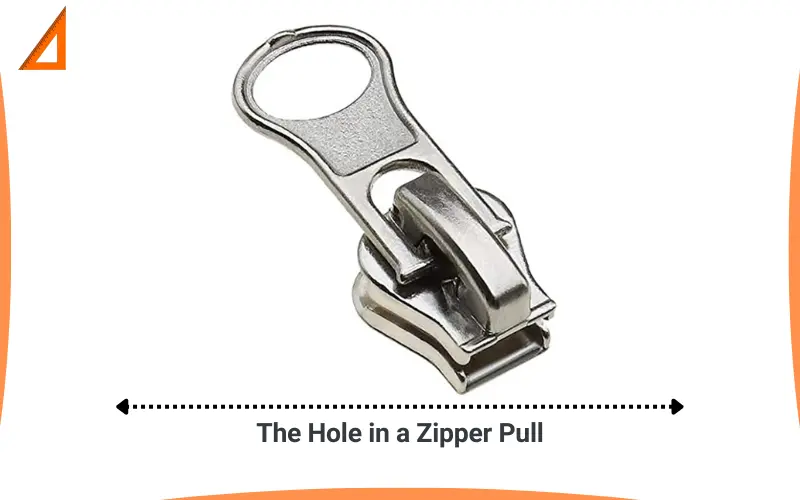
Many zipper pulls contain an opening that measures roughly 9 mm. While the overall zipper may be larger, the finger hole often falls close to this size.
You encounter zippers on jackets, backpacks, luggage, and countless other products every day. The opening must be large enough to grab comfortably but compact enough to maintain durability.
Because zipper pulls are designed for practical use, they provide a realistic example of how big 9 mm feels when interacting with an object directly.
5. A Small Jelly Bean
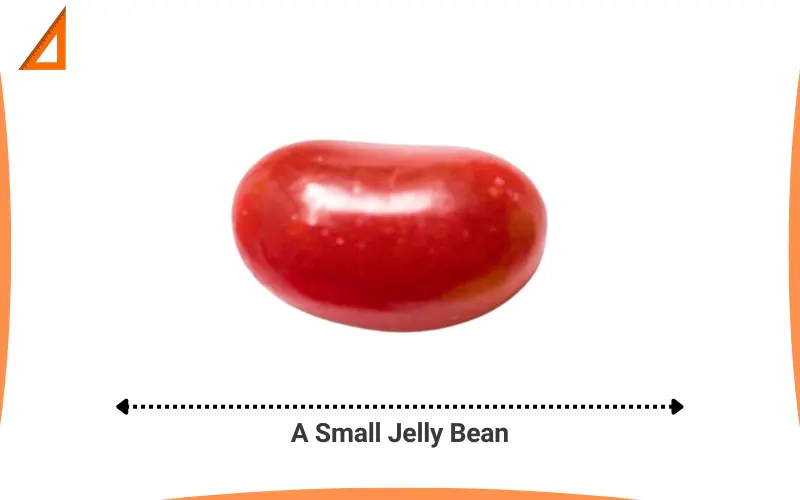
Many jelly beans measure close to 9 mm across their width. Their rounded shape makes them easy to compare with other small objects.
Unlike flat items, jelly beans provide a three-dimensional sense of scale. When holding one between your fingers, it feels small but still substantial enough to notice immediately.
Since candy is something most people have handled at some point, this comparison creates an instant visual image that helps explain the size more naturally.
6. A Small Hex Nut Opening
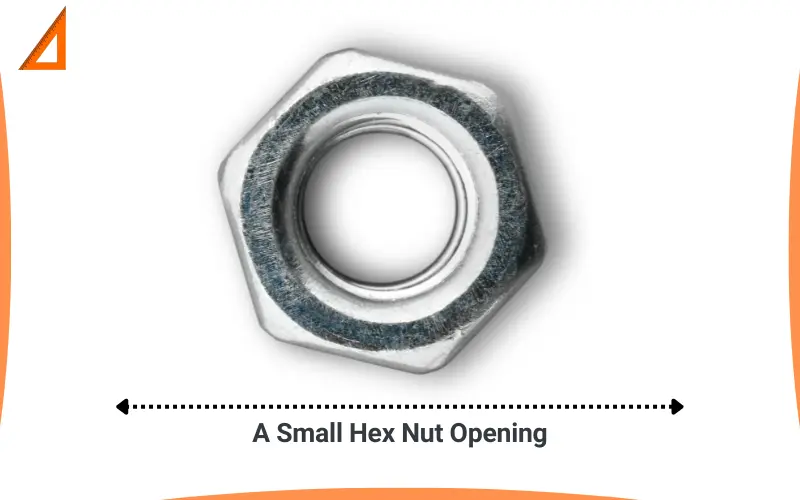
Certain small hex nuts used in DIY projects and hardware applications have openings close to 9 mm. If you’ve ever assembled furniture or worked on repairs, you’ve probably encountered components of this size.
A 9 mm opening is large enough to fit comfortably over small bolts while remaining compact enough for detailed work. Compared to larger construction hardware, it appears tiny. However, within the world of precision tools and fasteners, it feels fairly standard.
This makes it a practical reference for anyone familiar with basic hardware.
7. The Crown of a Wristwatch
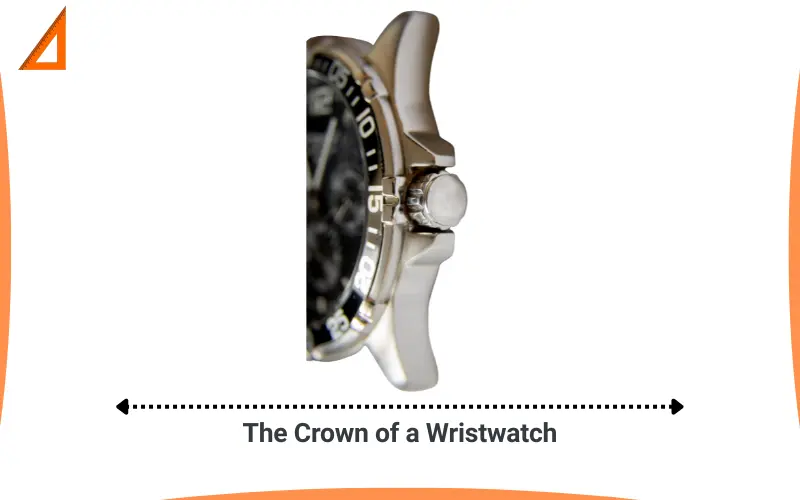
The crown on the side of many wristwatches often measures around 8–10 mm. This small knob is used for adjusting the time and date.
Despite being a tiny component, the crown must be large enough to grip comfortably between your fingers. That’s why manufacturers often design it close to the 9 mm range.
Most people have handled a watch at some point, making this an easy measurement to picture. It demonstrates how 9 mm can be both small and functional at the same time.
8. The Base of a Cherry Stem

Where the stem connects to many cherries, the width is often close to 9 mm. This may seem like an unusual comparison, but cherries are familiar enough that most people can quickly visualize them.
The stem base is small, round, and clearly visible. Looking at a fresh cherry provides a surprisingly accurate impression of this measurement.
Because fruit is part of everyday life, using a cherry creates a natural and memorable size reference.
9. A Backpack Drawstring End Cap
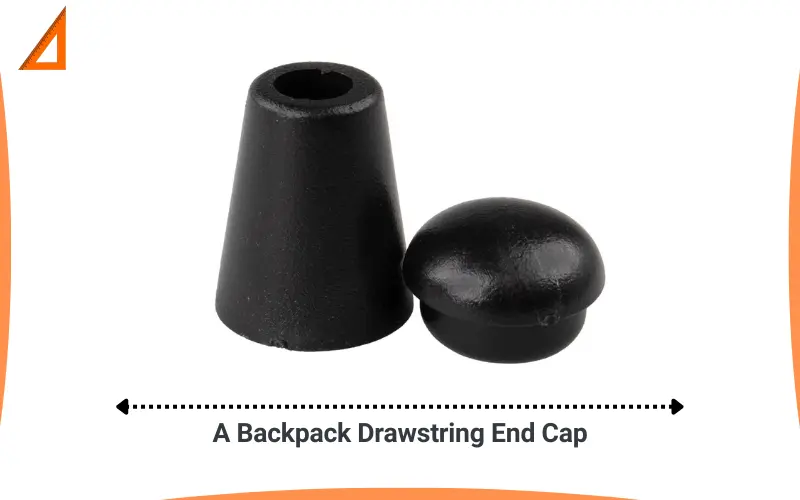
Many drawstring cords on backpacks and hoodies include plastic end caps measuring around 9 mm in width.
These caps are designed to prevent fraying while making the cord easier to handle. Since they need to be durable and noticeable, manufacturers often make them close to this size.
If you’ve ever tightened a hoodie string or adjusted a gym bag, you’ve probably held something very close to 9 mm.
10. A Small Craft Pom-Pom
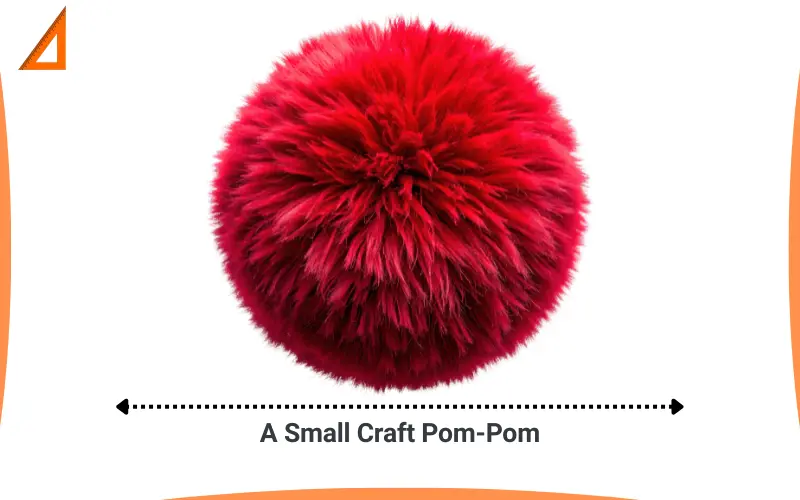
Craft pom-poms come in many sizes, and some of the smaller versions are around 9 mm in diameter. These are frequently used in school projects, decorations, and DIY crafts.
Unlike hard objects, pom-poms have a soft texture that changes how the measurement feels. Despite their light weight, they remain easy to spot because of their fluffy appearance.
For people who enjoy crafting, this provides another useful visual comparison.
11. A Small Rubber Furniture Pad
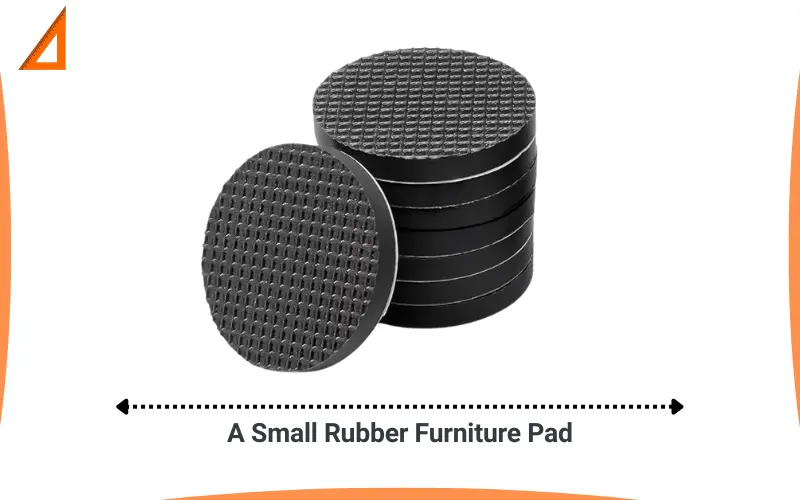
The tiny adhesive pads placed under furniture legs often measure about 9 mm across. These pads help protect floors from scratches and reduce noise when furniture is moved.
Most people have seen these pads beneath chairs, tables, and decorative items. Because they are small yet clearly visible, they offer another realistic example of a 9 mm object.
12. The Diameter of a Small Drinking Straw
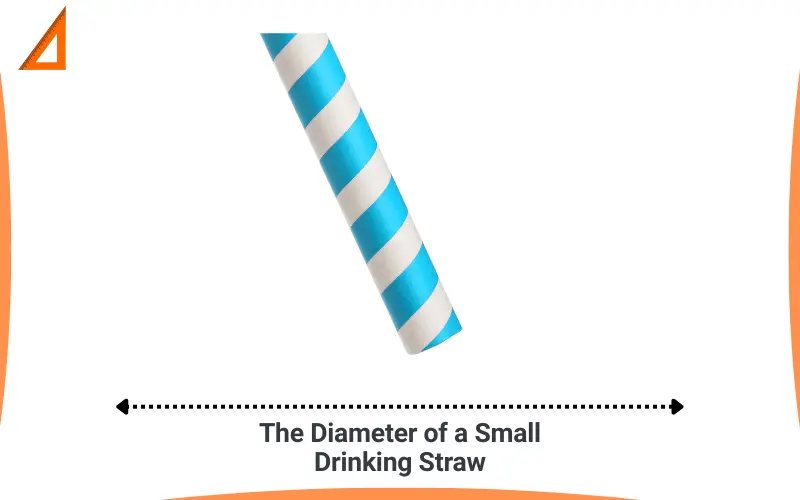
Certain narrow drinking straws have diameters close to 9 mm. While larger smoothie straws can be much wider, standard household straws often fall near this measurement.
Because straws are familiar objects used by people of all ages, they create an easy and practical size reference. Their circular shape also makes diameter comparisons straightforward.
Why 9 MM Is Easier To Notice Than 5 MM Or 6 MM
A few millimeters may not sound like much, but when dealing with small objects, the difference becomes surprisingly obvious.
For example, place a 5 mm bead next to a 9 mm bead. The larger bead immediately stands out. The same thing happens with buttons, pearls, seeds, and hardware components. Even though the numerical difference seems small, the visual difference is much easier to notice.
That’s why measurements around 9 mm often feel more substantial than people expect. They sit close to the 1 cm mark, which makes them easier to see and handle.
Everyday Places You May Encounter 9 MM Measurements
You may find objects close to 9 mm in:
- Headphones and earbuds
- Watches
- Clothing accessories
- Hardware supplies
- School stationery
- Kitchen ingredients
- Craft projects
- Backpack accessories
- Decorative items
- Electronic accessories
Because this size appears so frequently, understanding it can be surprisingly useful in everyday situations.
FAQs
How big is 9 mm in inches?
9 mm equals approximately 0.35 inches.
Is 9 mm close to 1 cm?
Yes. Since 1 centimeter equals 10 mm, 9 mm is only 1 mm smaller than 1 cm.
What object is about 9 mm big?
A green pea, corn kernel, earbud tip, watch crown, or jelly bean can all be close to 9 mm.
How can I estimate 9 mm without a ruler?
Compare it to a pea, earbud tip, zipper pull opening, or small jelly bean.
Is 9 mm considered large?
For jewelry, hardware, and craft supplies, it is fairly noticeable. For furniture or room dimensions, it is very small.
Conclusion
How big 9 mm is becomes much easier when you compare it to familiar everyday objects. Items such as green peas, corn kernels, earbud tips, watch crowns, jelly beans, and zipper pulls provide practical real-life size comparisons that are easy to recognize and remember.
Once you connect 9 mm with objects you regularly see and use, estimating similar measurements becomes much more natural. Whether you’re shopping online, comparing product dimensions, choosing craft materials, or working on a DIY project, these real-world examples offer a clear and accurate picture of what 9 mm really looks like.